
Making pose estimation accessible across neuroscience labs
In university labs, research often stalls on day one. A new student joins. They’re smart, eager, and ready to contribute, but end up spending their first few weeks wrestling with GPU access, installation issues, and legacy code. For research groups working at the edge of neuroscience and AI, that lost time is costly. At Columbia University, one lab is working to change that. Their goal: build accessible tools for behavioral neuroscience and help other labs use them, no matter their technical background or resources. And to do that, they first had to remove the barriers in their own workflow.
Matt Whiteway, a research scientist at Columbia, helped develop Lightning Pose, a user-friendly pose estimation tool designed for neuroscience researchers, not engineers. "Most of the people in labs we work with aren't machine learning experts," says Whiteway. "They might have some coding experience, but they're not trained to debug GPU jobs or deal with setting up complicated environments."
At the same time, the university’s shared GPU cluster was becoming a bottleneck. “You’d be waiting in a queue for hours or days, especially around conference deadlines. And when students only have a few months in the lab, you don’t want their whole project stuck in limbo.”
From setup to science in minutes
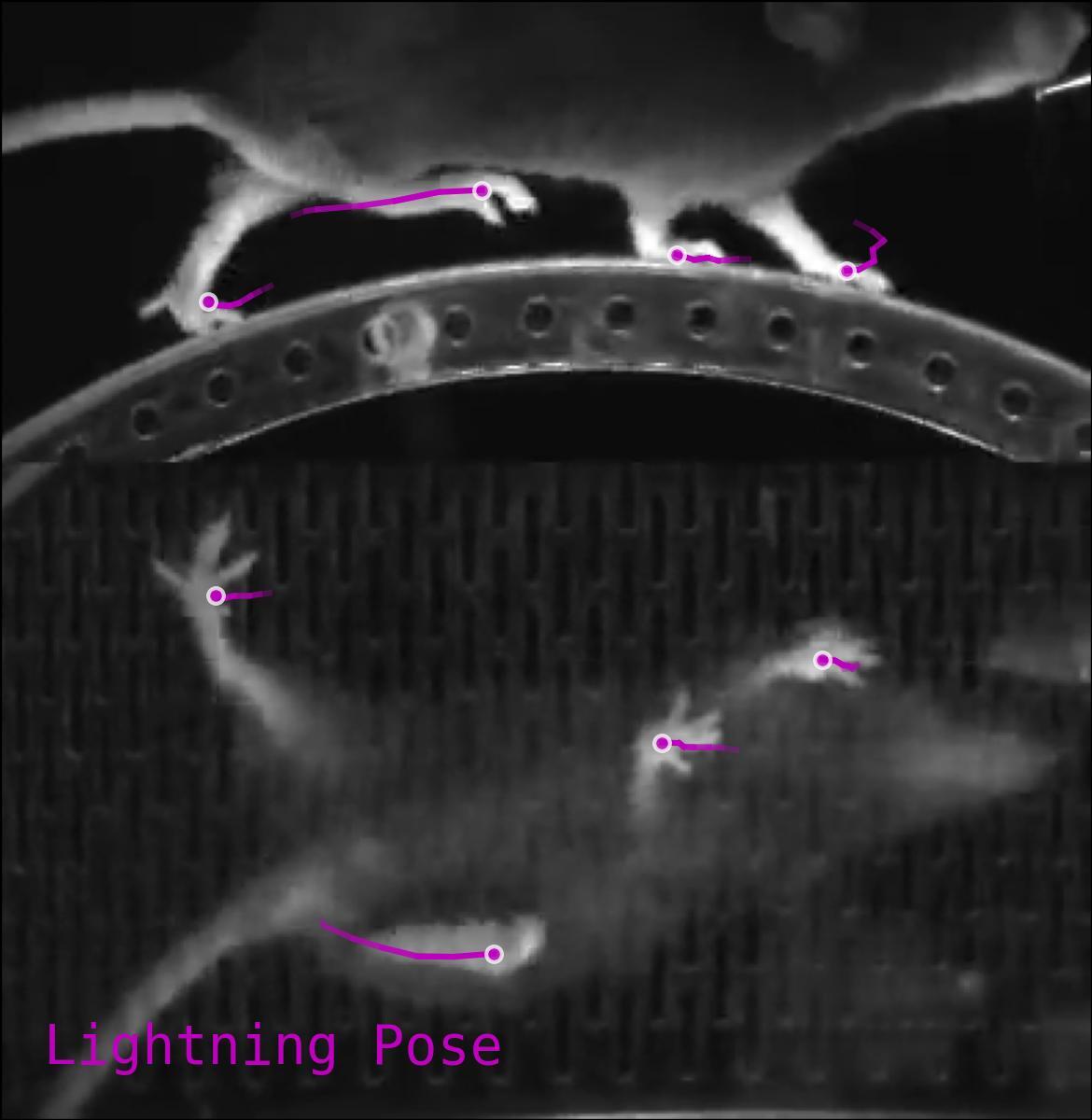
Lightning Pose started as a set of scripts for mouse behavior analysis. But over time, it became clear that more labs could benefit from the tool, if they could get it running. That’s where Lightning came in.
Today, Whiteway uses Lightning Studios to streamline onboarding and scale compute access. Researchers log in, launch an environment with the necessary dependencies and GPU access, and get straight to work.
“Instead of spending two weeks just figuring out how to run a script, people are analyzing data on day one,” he says. “It completely changes what’s possible in a short-term project.”
When the lab wants to share their software with outside collaborators, Lightning simplifies that too. Whiteway configures a Studio with everything pre-installed, uploads a sample dataset, and sends a link. “They can copy it, run it, try it on their own data. It removes all the technical friction.”
Bringing deep learning to under-resourced labs
One of the lab’s core projects is Lightning Pose, an open-source tool for pose estimation on small animal datasets. It’s designed specifically for neuroscience labs that want to train deep learning models without needing to become ML experts.
Users can label a few frames of video, train a model, and run inference through an intuitive web interface. The software runs locally if a lab has GPUs, but it also works seamlessly on Lightning for those that don’t.
Open this Lightning Studio
“For a lot of labs, especially those with more limited resources or computational expertise, setting up GPU machines isn’t feasible,” says Whiteway. “Lightning gives them another path to leverage these powerful tools to advance their research.”
That accessibility is key as the team brings Lightning Pose to more labs through hands-on workshops. This summer, he hosted a session with the Mediterranean Neuroscience Society, where researchers from Southern Europe and North Africa learned to analyze video data using the app.
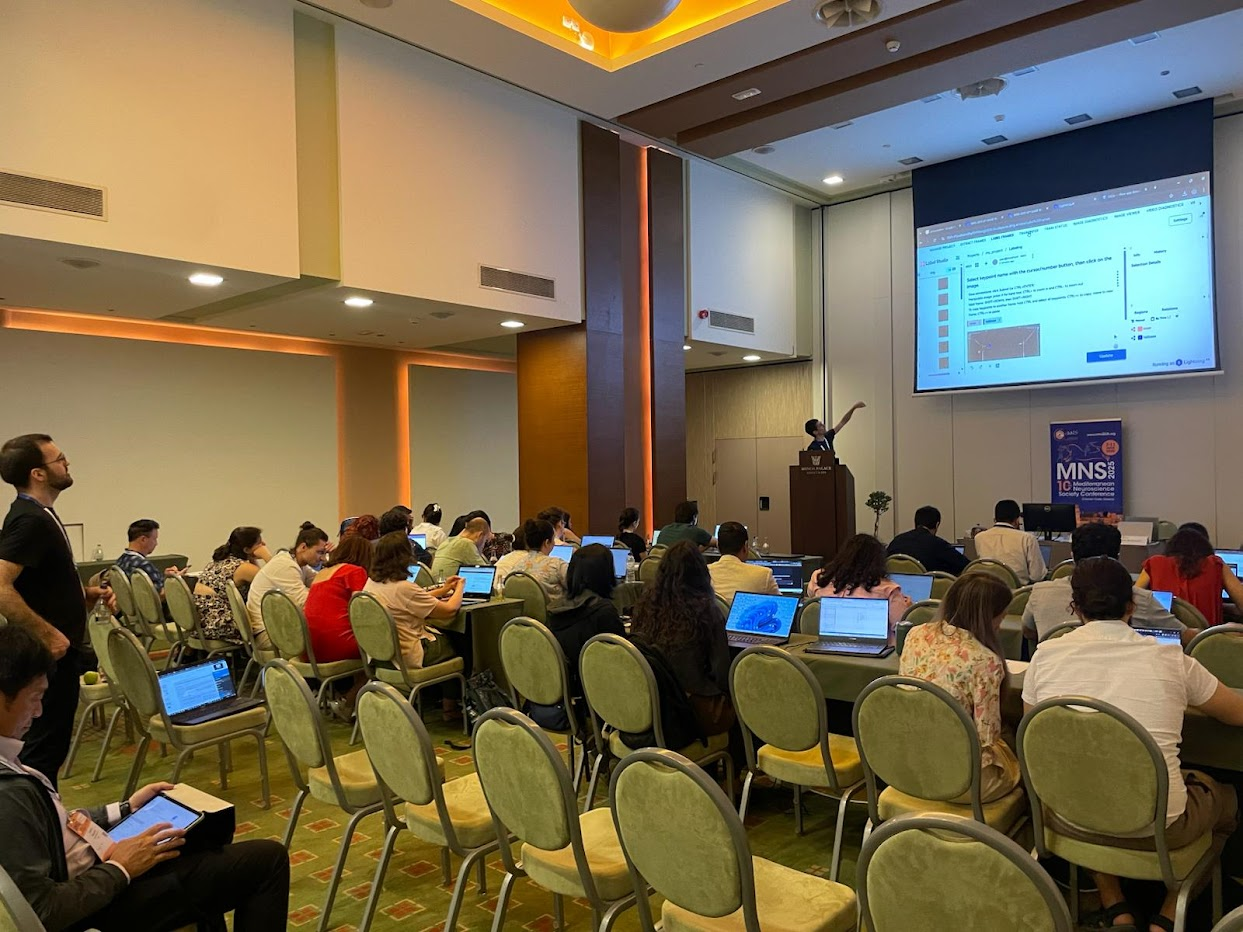
“These are labs that might not have access to local compute or funding to buy expensive hardware,” says Whiteway. “But they do have cameras, and a lot of behavioral data. Our goal is to show them that they don’t need a large infrastructure to get started.”
The workshop took place entirely inside Lightning Studios. Participants followed a preloaded workflow, analyzed data in the cloud, and left with a working copy they can continue using back home.
The Columbia team is also collaborating with researchers at UCSF, who have developed an unsupervised behavioral clustering tool. In joint workshops, they pair Lightning Pose with this method to help researchers uncover subtle patterns in animal behavior and track how they change under experimental conditions.
Scaling up for more complex experiments
As behavioral experiments grow in complexity, so do the tools needed to analyze them. Lightning Pose is being redesigned to support multi-camera experiments, with labeling, training, and visualization all built around synchronized multi-view data. These setups generate significantly more data and require more compute, including multi-GPU training and large-batch inference.
Lightning makes it possible to test and share these advanced workflows without asking labs to upgrade their hardware. And when the new version launches this fall, Whiteway’s team plans to expand their workshop series to include in-person sessions in New York and San Francisco, along with new YouTube tutorials for self-paced learning.
Democratizing AI across neuroscience labs
For Matt Whiteway, the goal goes beyond speeding up model training, it’s about transforming the field of neuroscience research.
“A lot of software in neuroscience works, but only on one person’s machine,” he explains. “With Lightning, we have a way to share that code more reliably, making the whole thing feel more like an app that’s accessible, stable, and easy to use.”
This shift matters because neuroscience, like many sciences, depends on collaboration and reproducibility. When software is locked to a single machine or complicated to install, labs waste precious time troubleshooting instead of discovering. By lowering these barriers, a new generation of researchers can spend their time focusing on the science itself.
As Lightning Pose spreads to more labs, especially those with limited resources, it’s fostering a growing ecosystem of researchers who can experiment faster, share methods openly, and accelerate discovery. Democratizing AI in neuroscience means unlocking new insights and enabling experiments that were once too complex or resource-intensive to attempt. “In the end,” says Whiteway, “it’s about reducing the time from idea to result. When that gets shorter, science moves faster.”
Read more case studies and blogs:
• Reticular Sped Up Drug Discovery Research From 6 to 3 Months with Lightning AI
• How this Team Won the LeRobot Hackathon by Folding Shirts and Reimagining Robotics
• View all