
Teaching robots everyday tasks
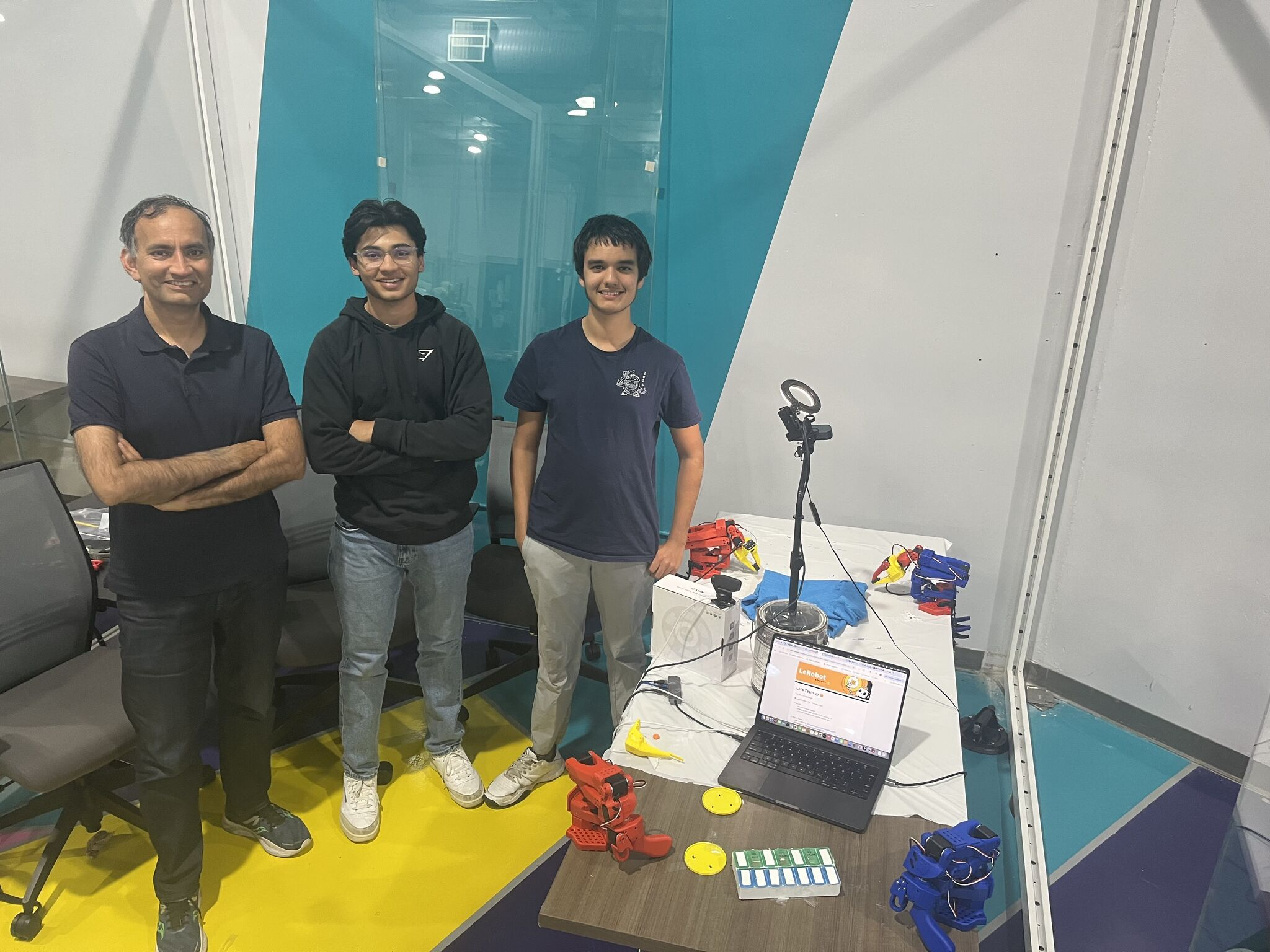
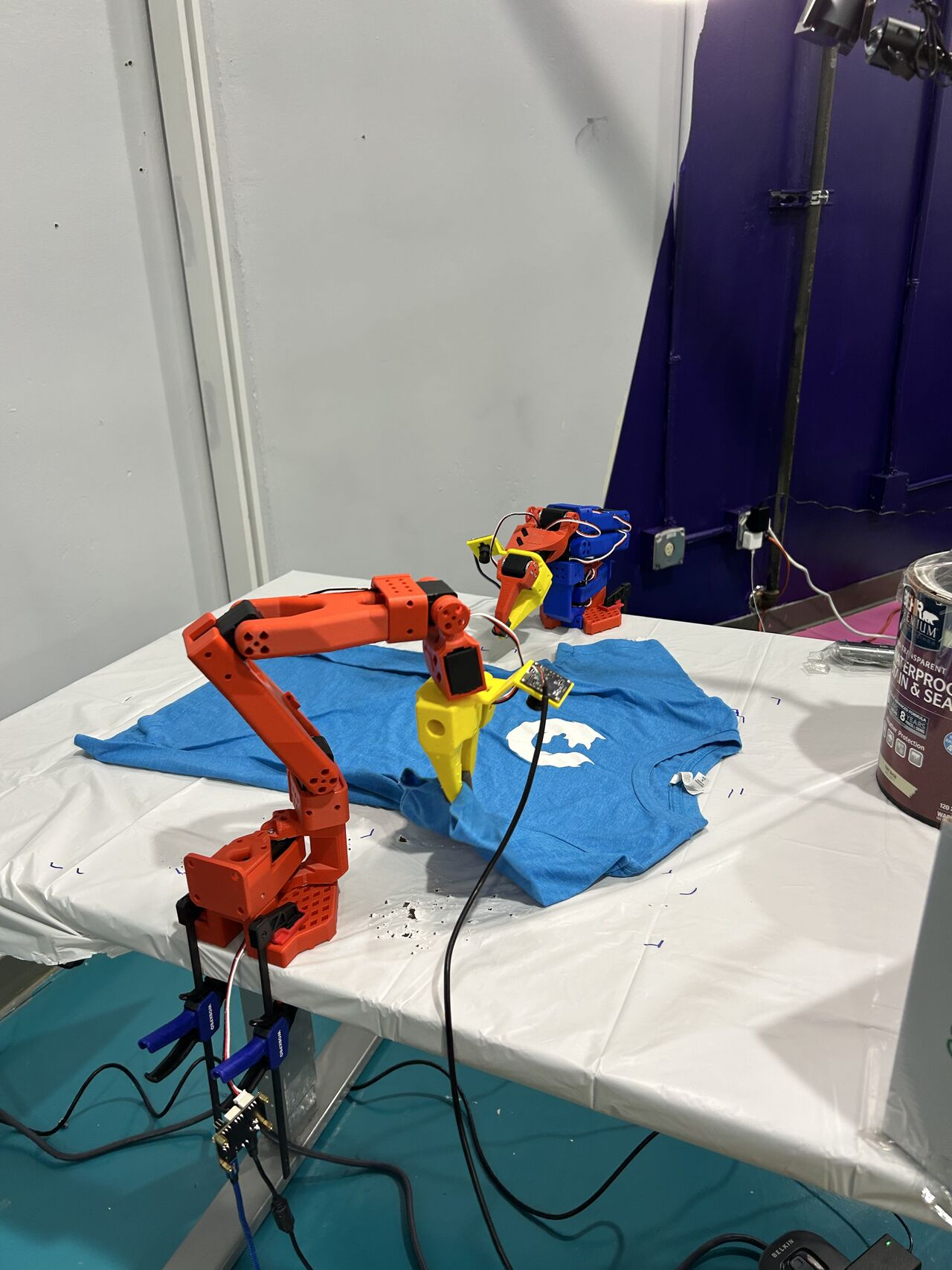
Most robotics demos look impressive, but rarely practical. Team 250 (Ez_2_AI) wanted to change that. Competing in the SF Bay Area node of Hugging Face’s global LeRobot Hackathon, they set out to teach a low-cost robot arm to perform everyday tasks with real-world utility: folding clothes and sorting medicine.
With just one weekend, three engineers, and a 3D-printed SO100 arm, they tackled two ambitious challenges: t-shirt folding and medicine sorting. Using imitation learning for t-shirt folding, the team recorded 86 demos, trained with the pi0, ACT, and SmolVLA models, and achieved a ~70% folding success rate. Medicine sorting was aimed at assisting seniors with limited dexterity. The team prototyped a one-arm system to sort small objects into pill boxes, a concept they plan to continue developing post-hackathon.
An AI platform to unlock rapid iteration
The biggest constraint wasn’t ideas or code, it was the ability to try ideas quickly on reliable high-performance compute. High-frequency model training, large video datasets, and real-time inference are tough enough in a lab, let alone a 48-hour hackathon.
The team organized on the Lightning platform and was able to coordinate multi-team effort in a short period to train a SmolVLA model for 40,000 steps in 2 days using H100 and A100 GPUs on Lightning. Once training was underway, the team removed data loading bottlenecks to handle video-heavy imitation learning datasets using Lightning’s data prep tools.
Like all hackathon projects, the team had last minute mishaps that caused them to lose 36 episodes due to camera issues. However, they recovered quickly and were able to deploy real-time inferencing on Lightning AI to reach a 50-70% real-time performance on the folding task. In just a short span of two days, the team trained, optimized data and deployed a non-trivial model to catapult them to 1st place in the US and 2nd place globally.
https://pl-bolts-doc-images.s3.us-east-2.amazonaws.com/app-2/ez2ai.mp4
Local collaboration, global impact
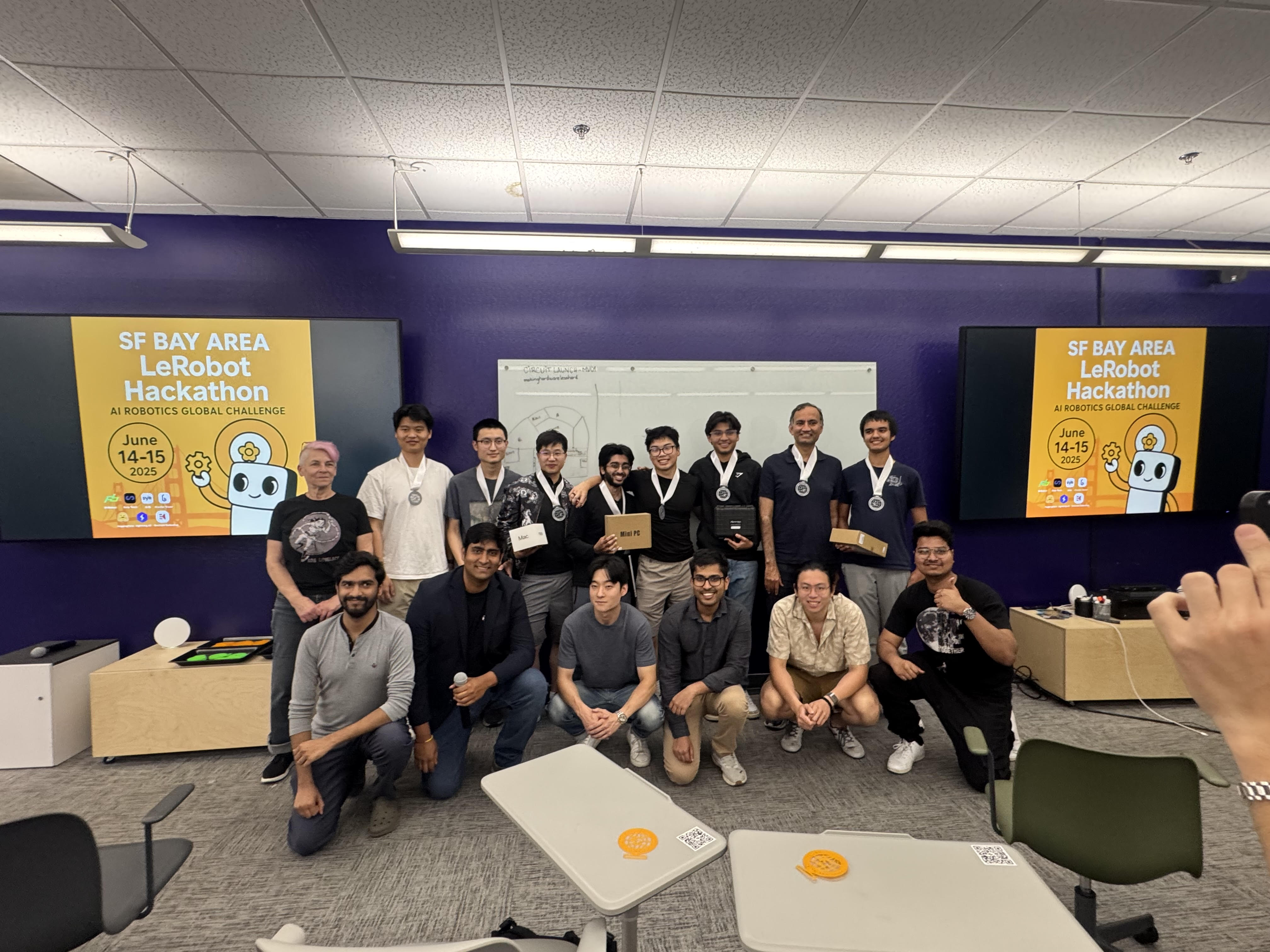
The SF Bay Area node became one of the most active in the world. Hosted at Circuit Launch in Mountain View and supported by Solo Tech’s low-latency inference platform, it deployed more LeRobot kits than any other site. It generated so much demo traffic it briefly crashed Hugging Face’s model hosting server.
Team 250 earned first place in the U.S. and second globally, out of more than 3,000 participants across 44 countries. Their project stood out not just for its technical strength, but for its clear real-world vision.
From hackathon to real world impact
Their project is far from done. Team 250 published their dataset to Hugging Face and plans to continue refining both the t-shirt folding and medicine sorting tasks. But the real breakthrough wasn’t just a working demo, it was a glimpse at a faster, more accessible pipeline for robotics innovation. "It’s still early days for Robotics AI with its ChatGPT moment around the corner. We can’t wait to realize the future where all daily tasks will be done by robots," shared Pranav Saroha.
With scalable infrastructure from Lightning AI, the team showed that it's possible to go from idea to trained model to real-world execution in just days, not months. That speed isn’t just a hackathon advantage, it’s a foundation for solving real problems faster. From assistive robotics for people with limited dexterity to industrial automation in unpredictable environments, teams like Ez_2_AI are proving that the next generation of robotic systems won’t just be smarter, they’ll be built faster, by smaller teams, and deployed more widely.
By open-sourcing their work, Team 250 is also contributing to a broader shift: where robotics research isn’t locked behind institutional walls, but shared, replicated, and improved by a global community.
Read more case studies and blogs:
• How Columbia Labs Accelerates Neuroscience Research and Democratizes AI with Lightning AI
• Reticular Sped Up Drug Discovery Research From 6 to 3 Months with Lightning AI
• View all