NewNews
October 2026 Security Incident
October 2026 Security Incident On October 15, 11:00 PM UTC we identified a security incident on the Lightning Platform involving unauthorized access to credentials.

October 2026 Security Incident On October 15, 11:00 PM UTC we identified a security incident on the Lightning Platform involving unauthorized access to credentials.
September was full speed ahead on what we shipped. If you missed our weekly recaps on LinkedIn and X, here's what happened.
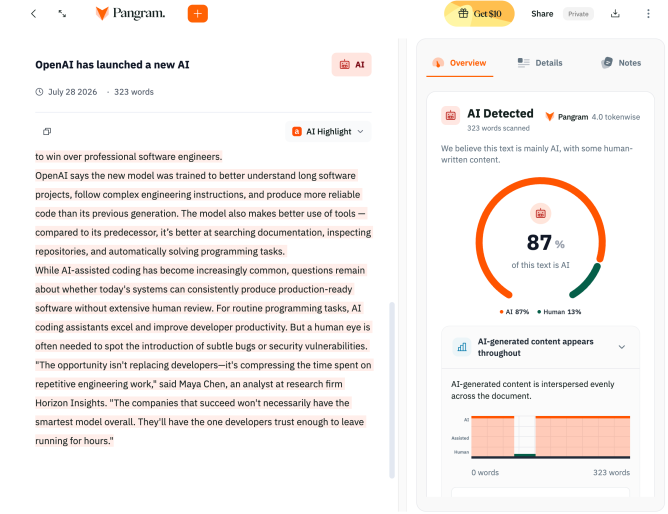
The AI-detection startup scaled from 3 people to 25 without ever hiring a dedicated infrastructure team.
The DeepSeek V4 Pro serverless Model APIs is scheduled to be retired at 5pm PT on September 23, at which time this model will be disabled and any requests made to it will return HTTP error code 400.
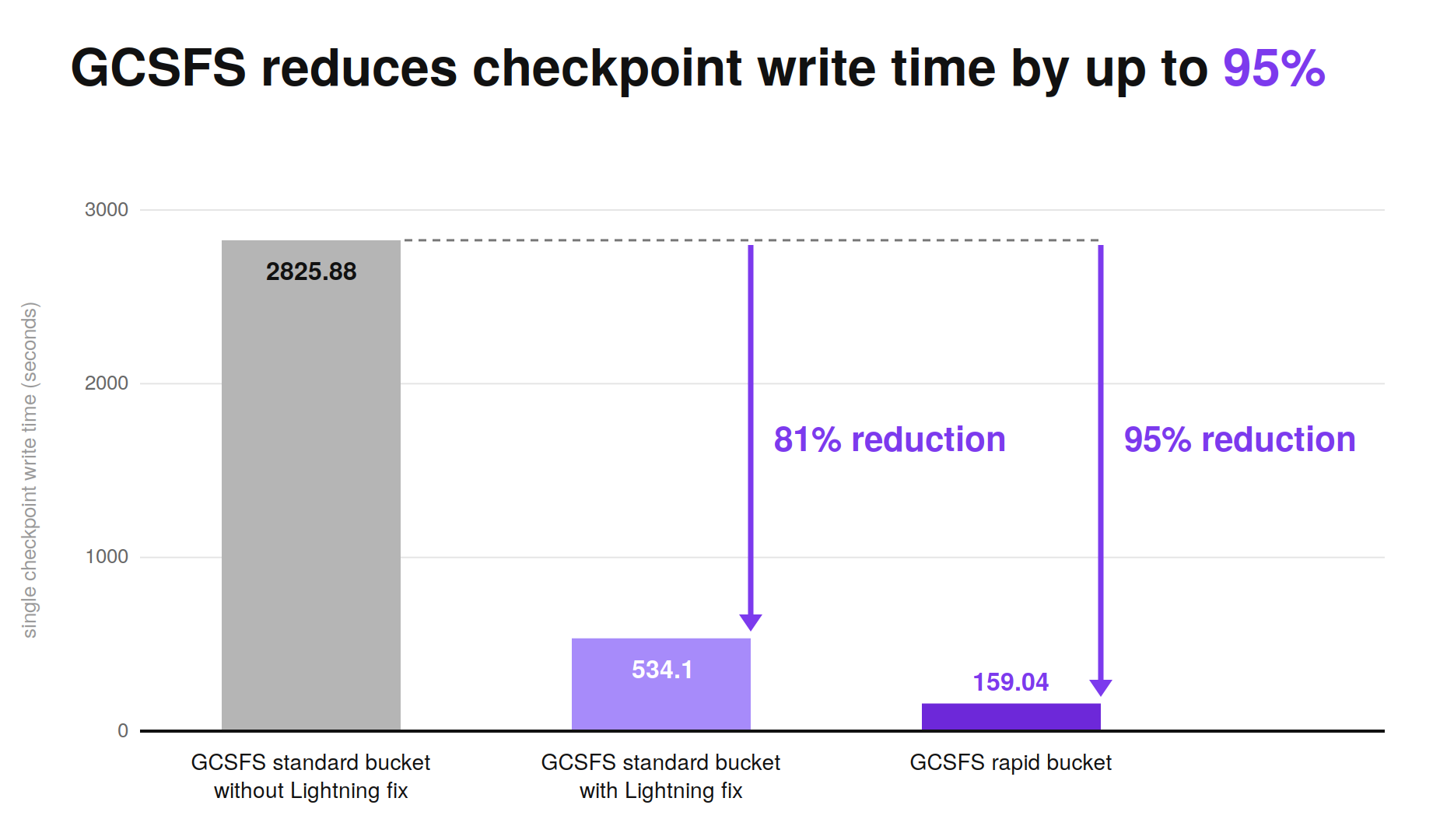
We worked with Google Cloud to fix how PyTorch Lightning moves data between GPUs and object storage.
The GPT-OSS 20B and GPT-OSS 120B serverless Model APIs are scheduled to be retired at 5pm PT on September 15, at which time these models will be disabled and any requests made to them will return
Our team covered a lot of ground between what we shipped and where we were in August. If you missed our weekly recaps on LinkedIn and X, here’s what happened.
The Nemotron 3 Nano serverless Model API is scheduled to be retired at 5pm PT on August 19, at which time this model will be disabled, and any requests made to it will return HTTP error code 400.
We covered a lot of ground with what we shipped in July 2026. If you missed our weekly recaps on LinkedIn and X, here’s what happened.
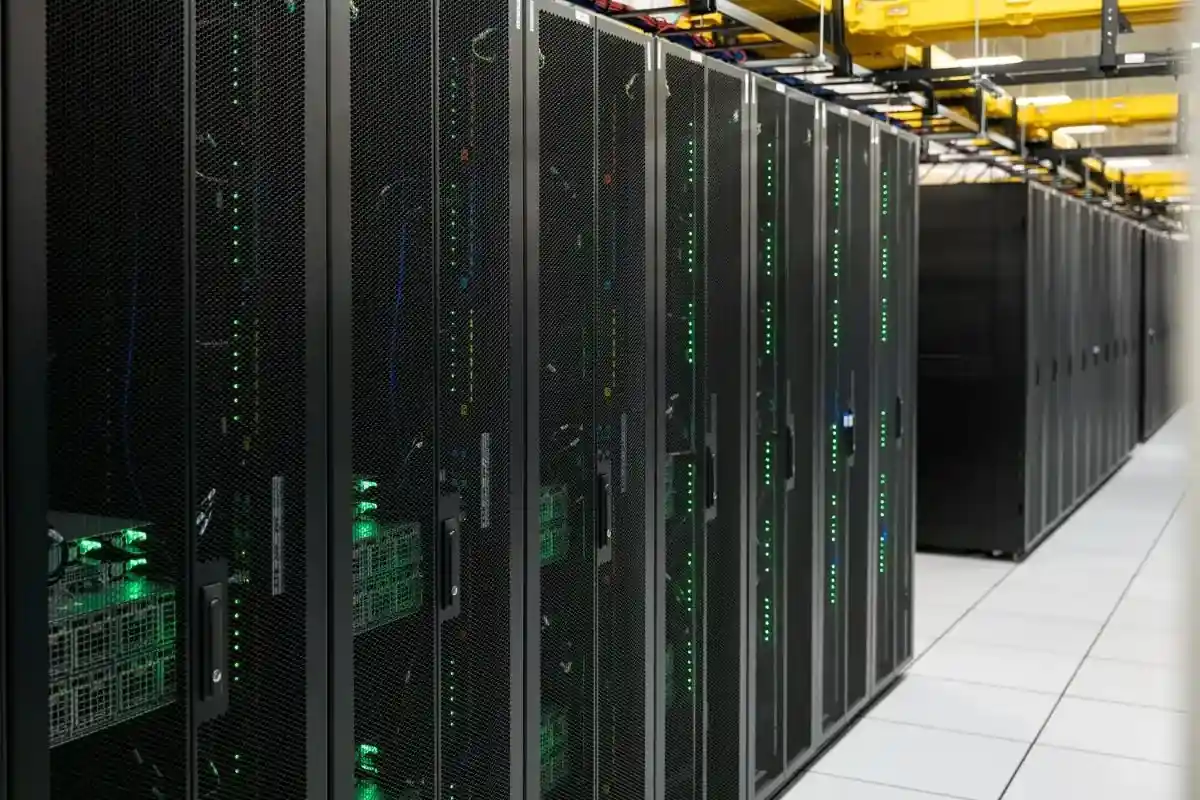
How we built a performant AI-native cloud on owned H100 and B200 GPUs, with bare-metal NCCL speed inside fully managed VMs.
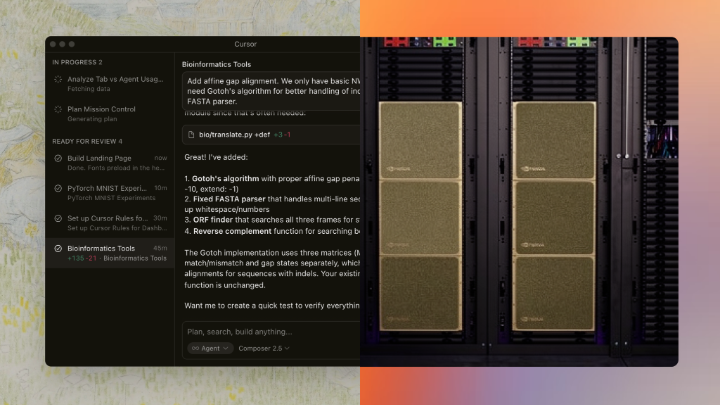
When Cursor needed a partner to design, deploy, and operate the compute foundation for their next venture, they trusted Lightning AI to architect a customized NVIDIA HGX B200 SuperPOD that didn’t
Lightning AI now owns and operates its H100 fleet end-to-end. Guaranteed on-demand and spot capacity with a 1 year commitment, built for enterprise AI teams.
5 and Nemotron 3 Ultra serverless Model APIs are scheduled to be retired at 5pm PT on July 13, at which time these models will be disabled and any requests made to them will return HTTP error code
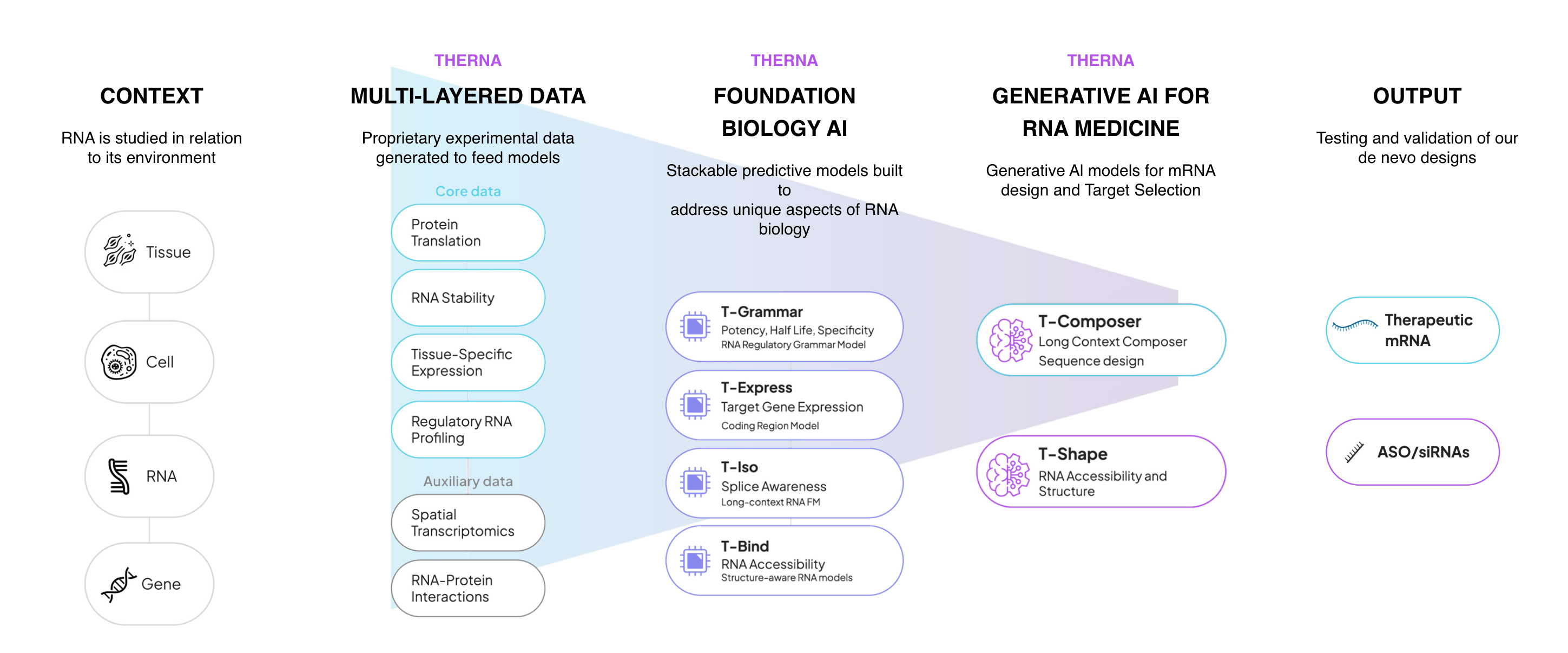
Therna Biosciences traded infrastructure bottlenecks for research velocity on Lightning AI
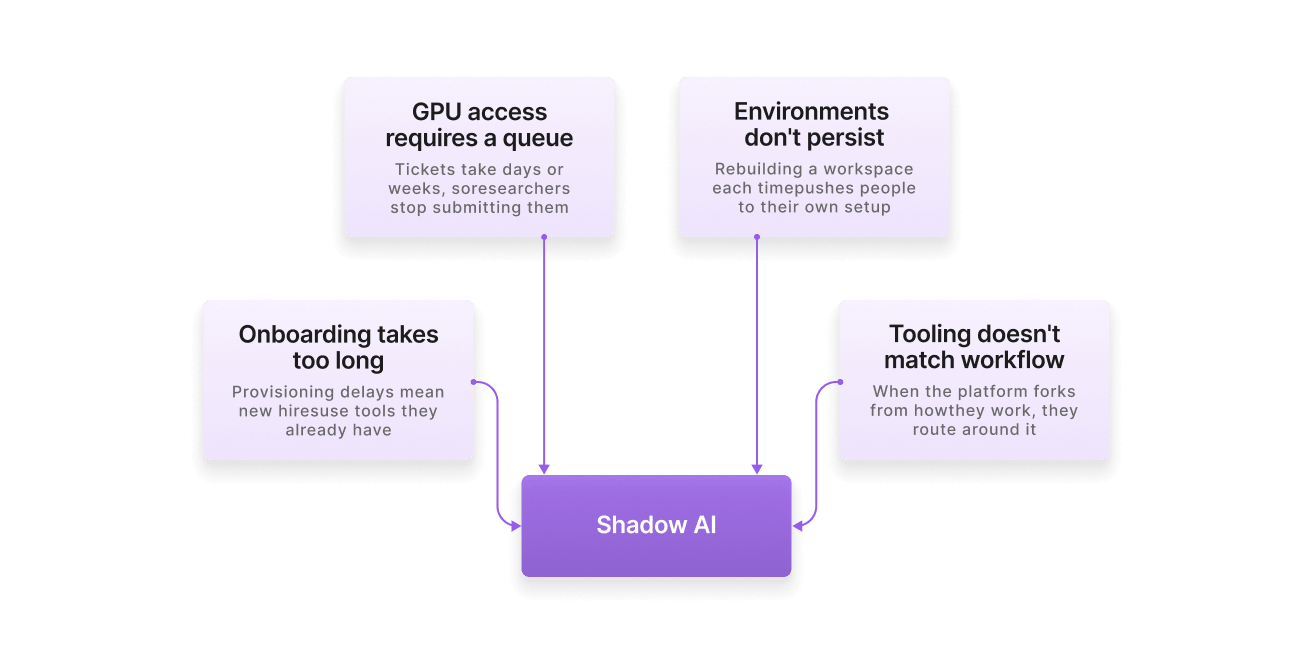
Shadow AI is when researchers build outside your approved AI infrastructure. Learn what causes it, why it is a growing enterprise risk, and how building on Lightning AI reduces your threat exposure.
5 and GLM 5 serverless Model APIs are scheduled to be retired at 5pm PT on June 11, at which time these models will be disabled and any requests made to them will return HTTP error code 400.
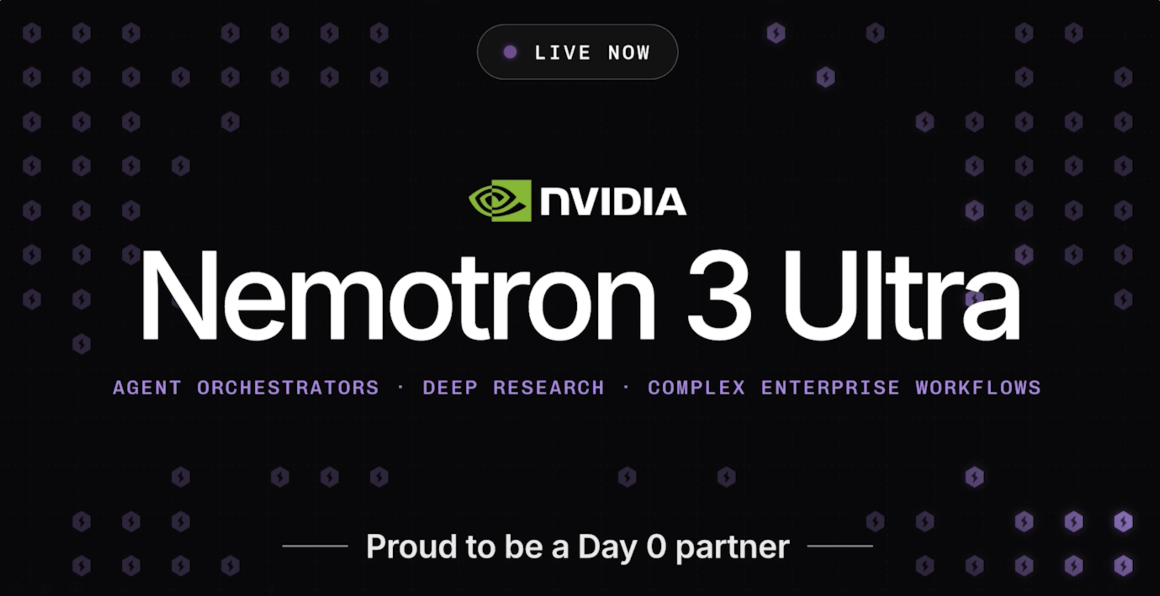
Deploy Nemotron 3 Ultra, an open frontier reasoning model for long-running agents. Scale orchestration and reasoning with Lightning AI. No proprietary model lock-in.
3 70B serverless Model APIs are scheduled to be retired at 5pm PT on May 15, at which time these models will be disabled and any requests made to them will return HTTP error code 400.
3. The attack targeted the distribution layer, not the source code repository.
Build multimodal agent systems that can see, hear, and reason using NVIDIA Nemotron 3 Nano Omni on Lightning.
DeepSeek dropped two open-weight models engineers have been waiting on for months.
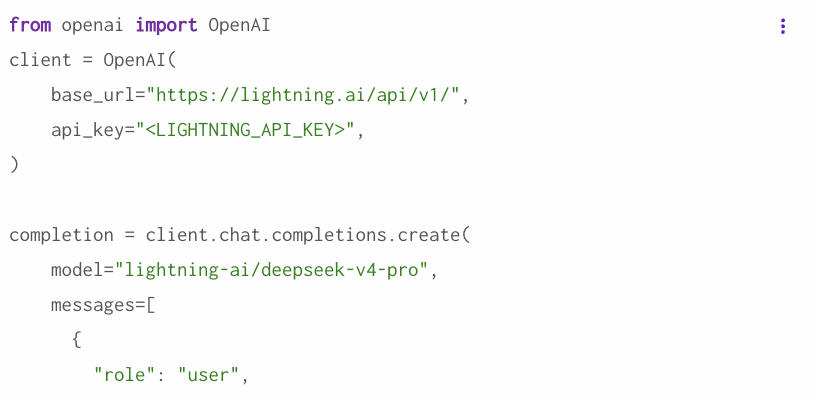
DeepSeek V4 Pro is now available on Lightning AI. Start building with it today using a single API call.
The term "agent harness" is being thrown around on blogs, X, podcasts and in heated debates between household names.
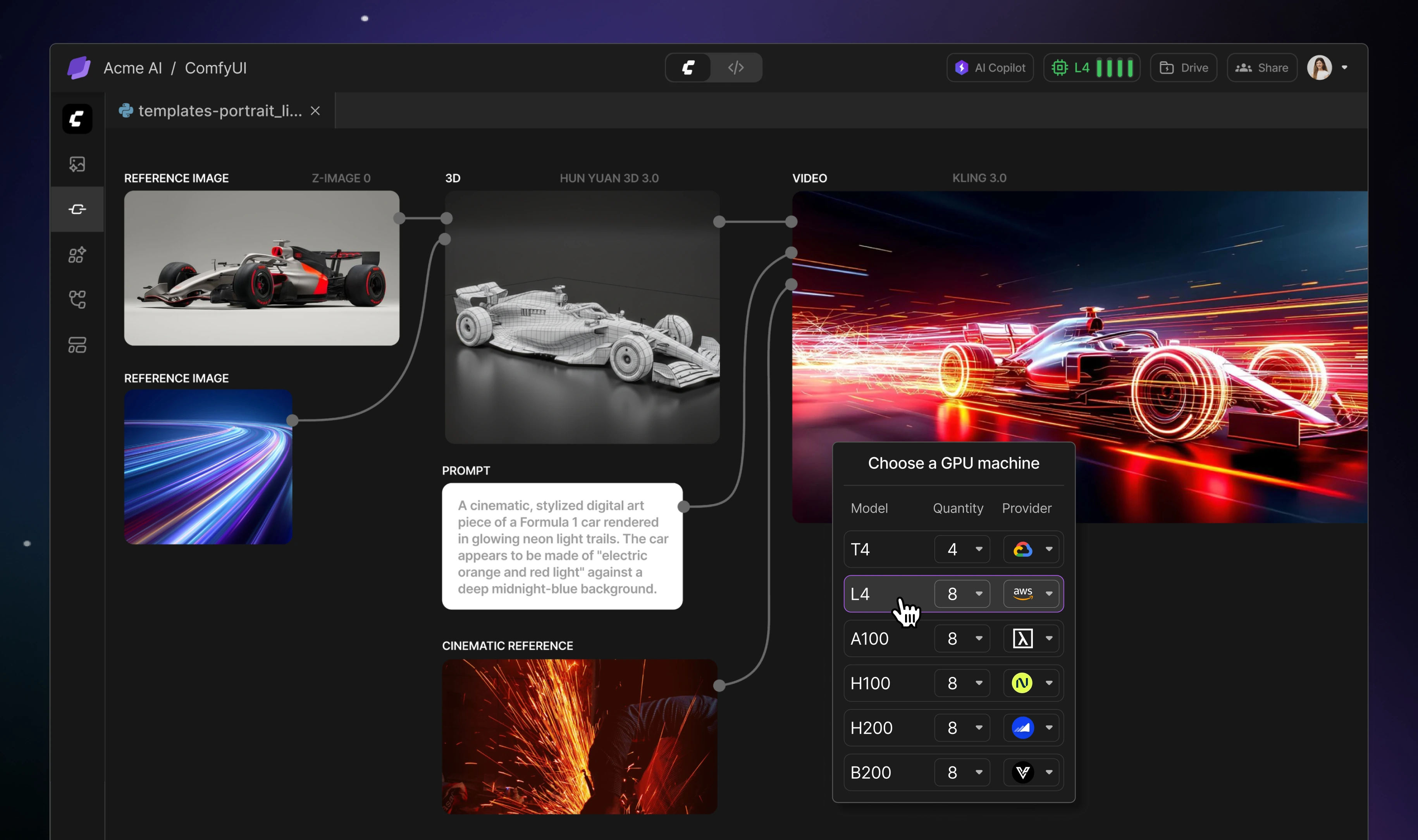
Looking to run ComfyUI in the cloud without installing drivers or managing GPUs? Lightning lets you launch ComfyUI online in one click, with up to 80 free GPU hours and no subscription required.
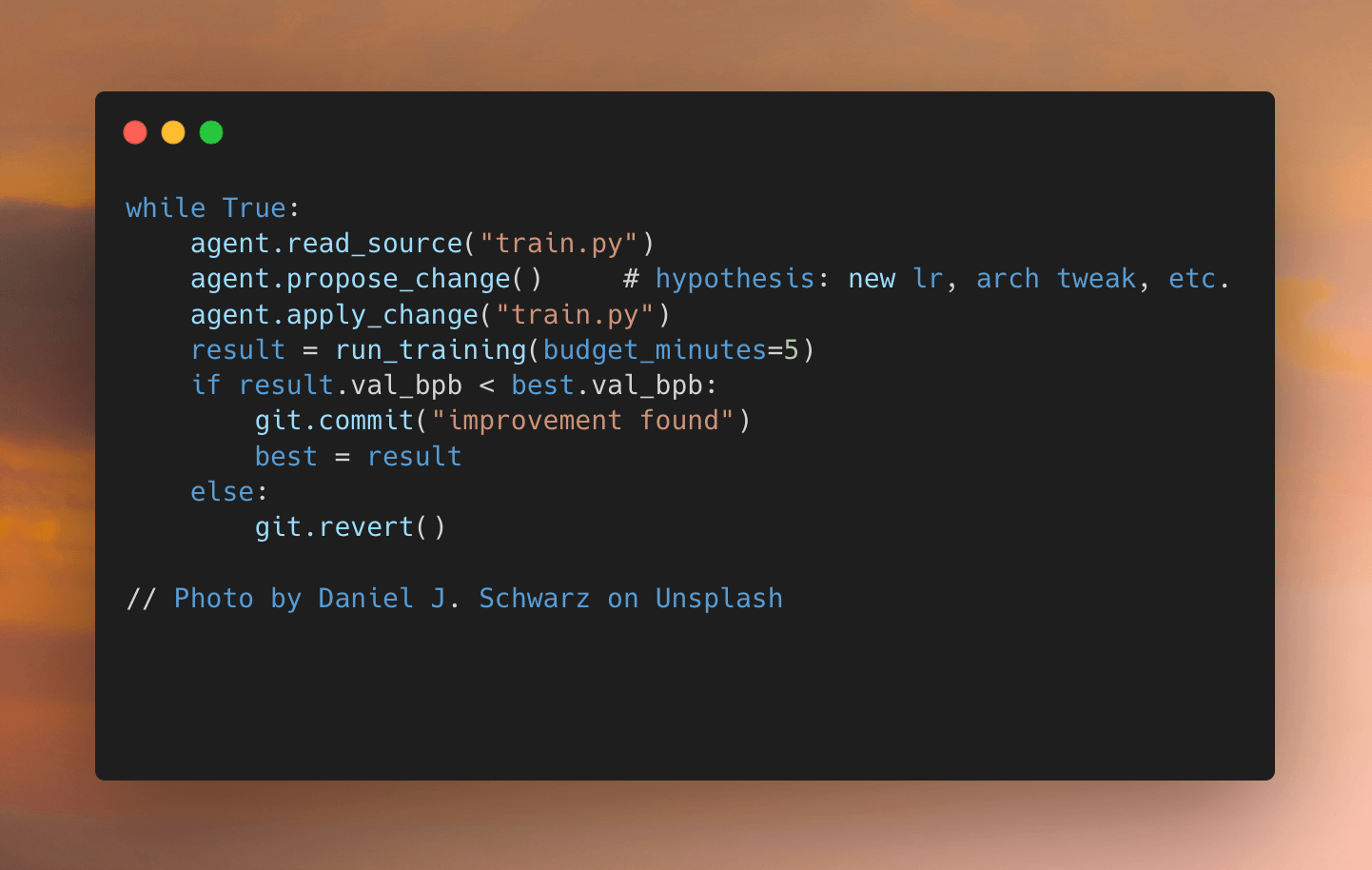
Andrej Karpathy's autoresearch runs AI-driven ML experiments autonomously — no supervision needed. Learn how it works and run it on Lightning Studios.
5 real ways to get value from Andrej Karpathy's microGPT, from experiment tracking to transformer intuition.
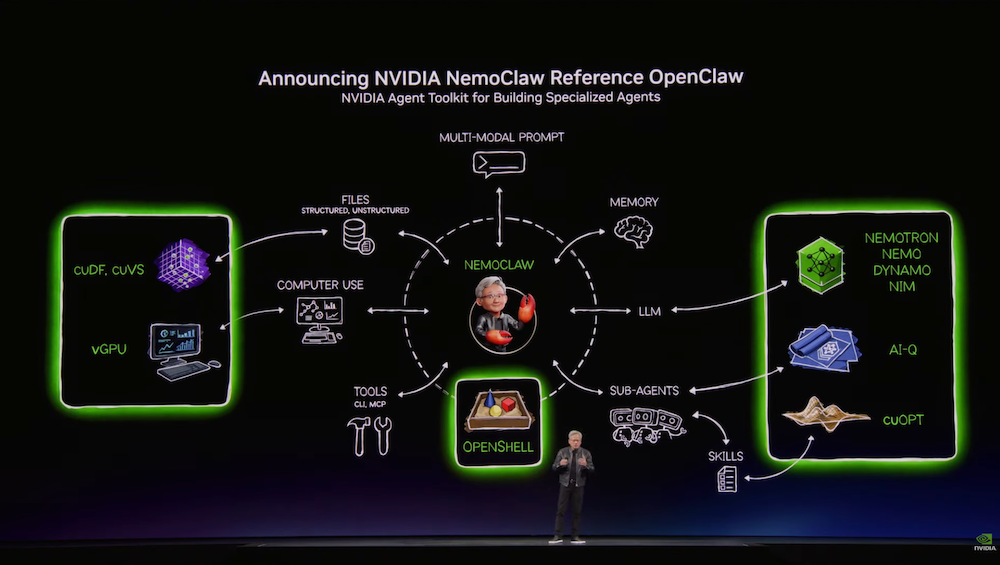
Lightning integrates with NVIDIA OpenShell by providing high-performance frontier open model endpoints, nabling agents to leverage our compute and models safely, efficiently, and at scale.

What is ZeroClaw? Discover how this OpenClaw alternative replaces heavyweight AI frameworks, and leverages Rust for secure, local-first agent workflows.
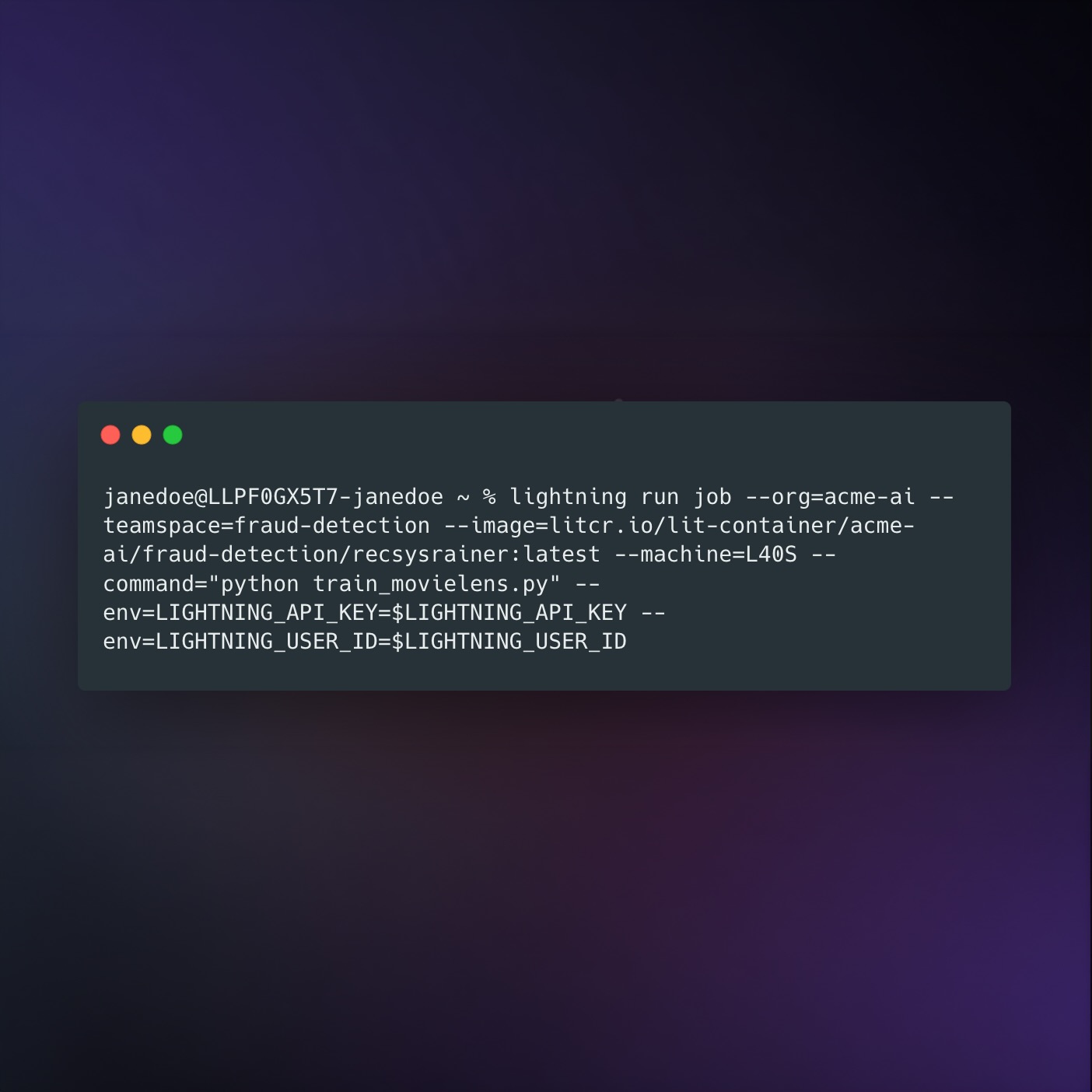
How to manage Lightning Studios, jobs, and GPU switching entirely from your terminal using the Lightning CLI.
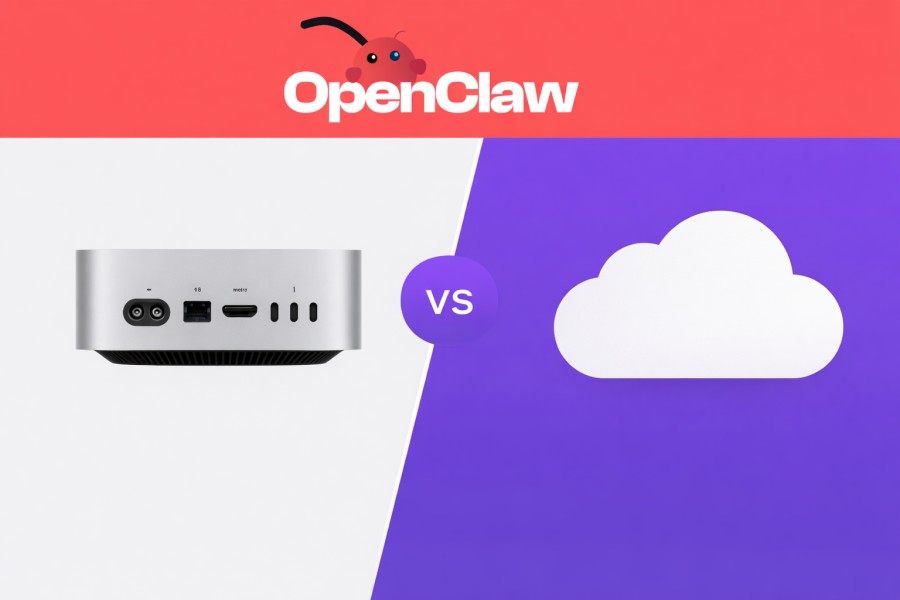
OpenClaw is the first easy-to-use personal AI agent, but you want to run it safely. Here we compare running on a mac mini vs on the cloud.
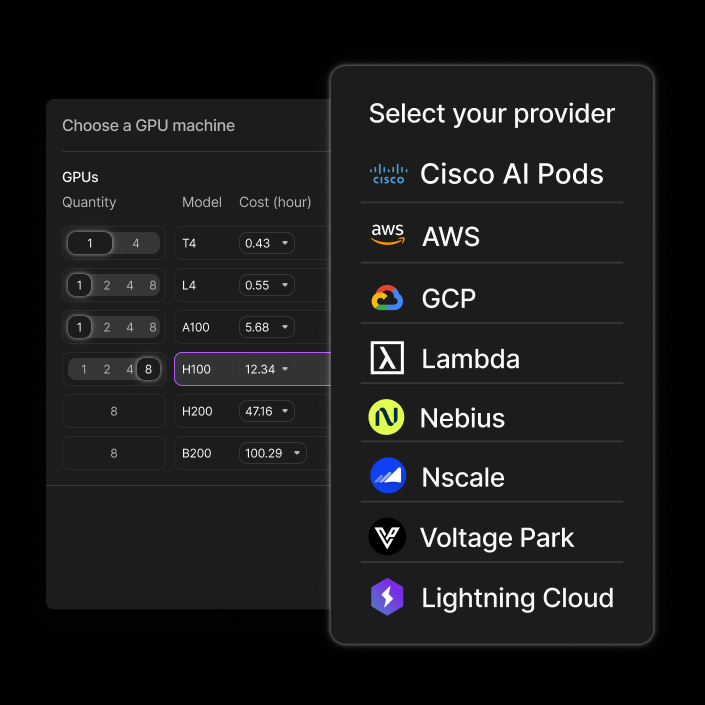
Run enterprise AI end-to-end on Cisco AI Pods with Lightning. Train, deploy, and scale AI workloads across on-prem and hybrid cloud.
OpenClaw (formerly Clawdbot and Moltbot) is a viral autonomous AI agent that hit 100K stars and triggered Mac Mini sellouts.
Lightning AI and Voltage Park merge to build a vertically integrated, AI-native cloud - combining AI software and owned GPU infrastructure in one platform.
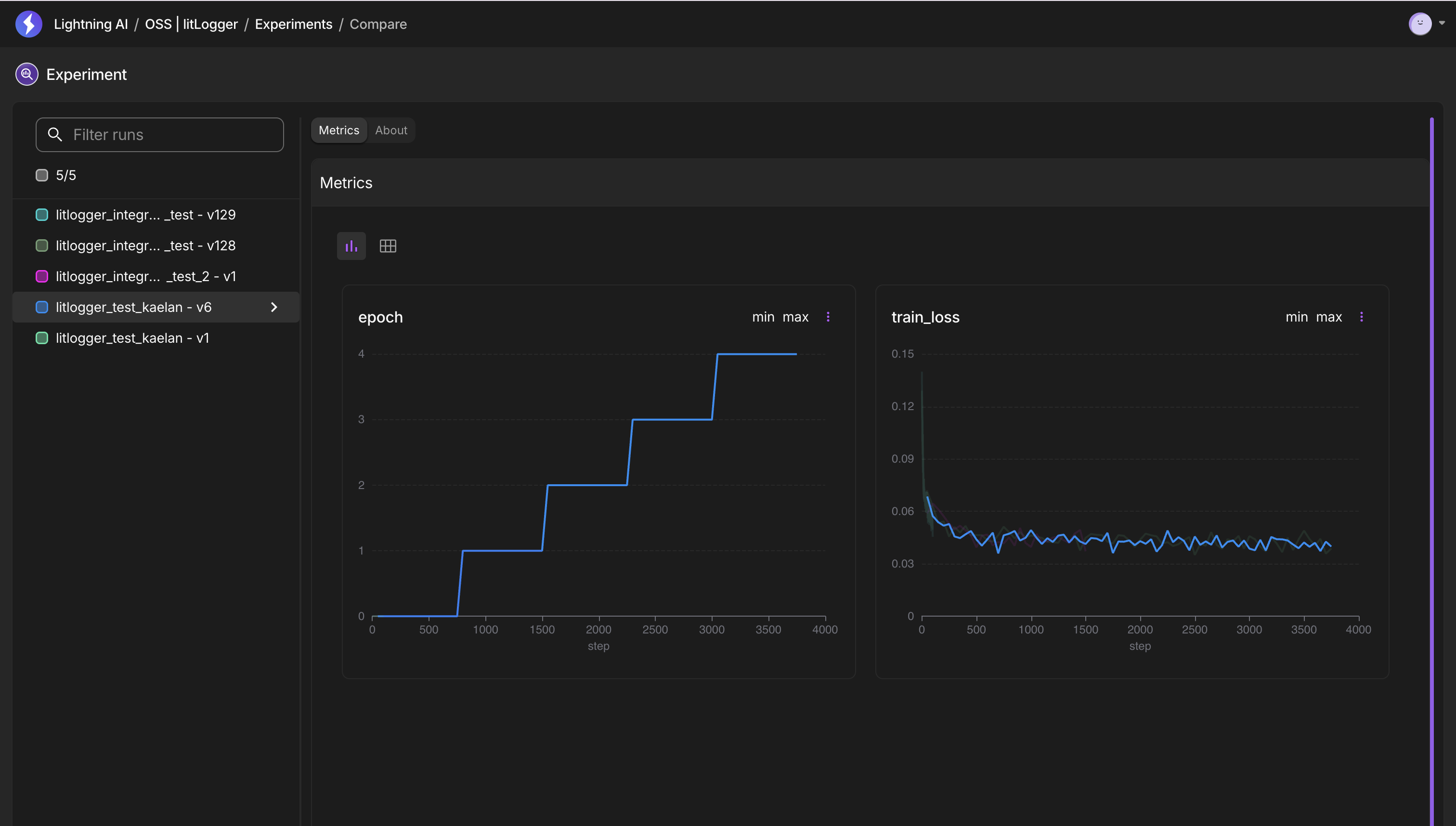
Introduction to LitLogger With Neptune shutting down, many ML teams are facing the same question: "Where do we move our experiment tracking without rewriting our code or losing history?"

Cloudflare is down again, and I just want to rant a bit about how to think about protecting against these scenarios if you are new to AI inference.
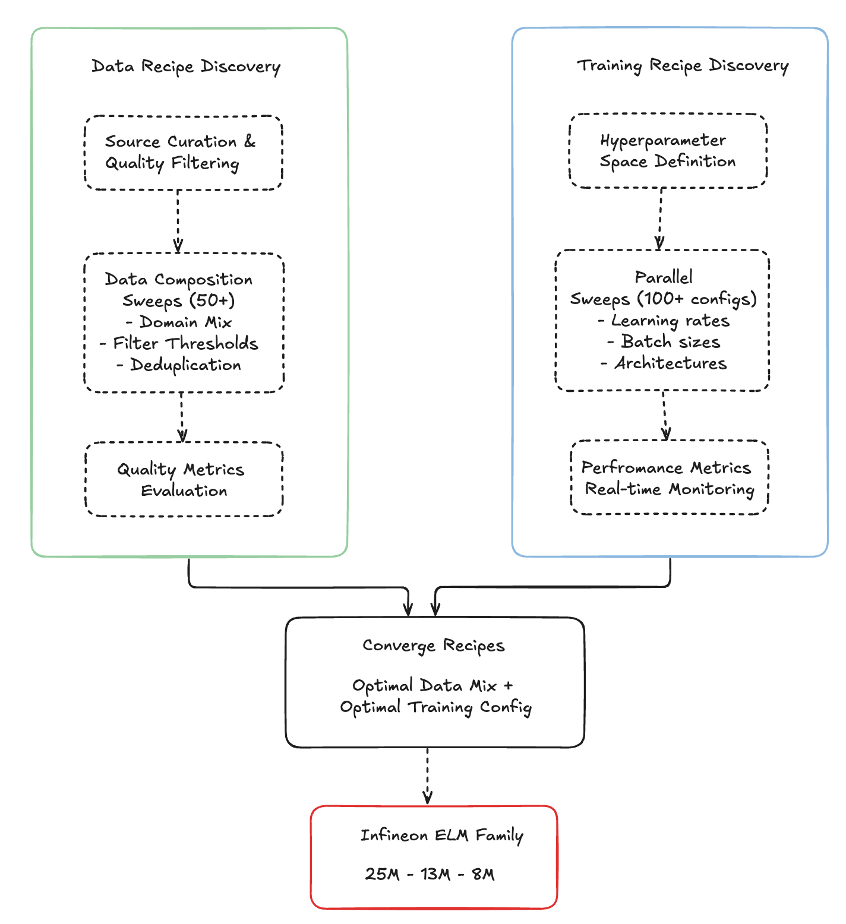
Infineon compressed 1.5-2 years of development into 4 months with Lightning AI.

For the first time, teams can access high-performance GPUs with a full-featured platform. No tradeoffs between flexibility, speed, or scale.
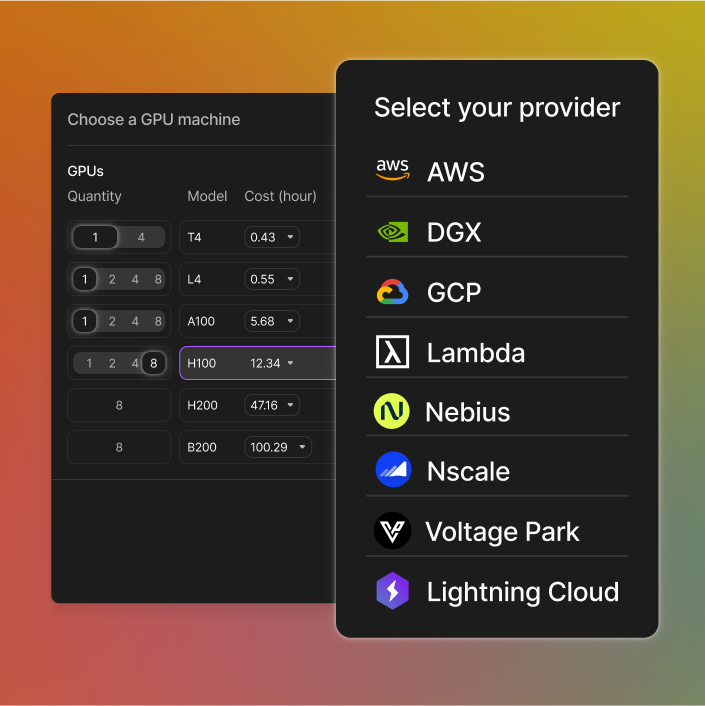
Access high performance GPUs with a full-featured platform. No tradeoffs.
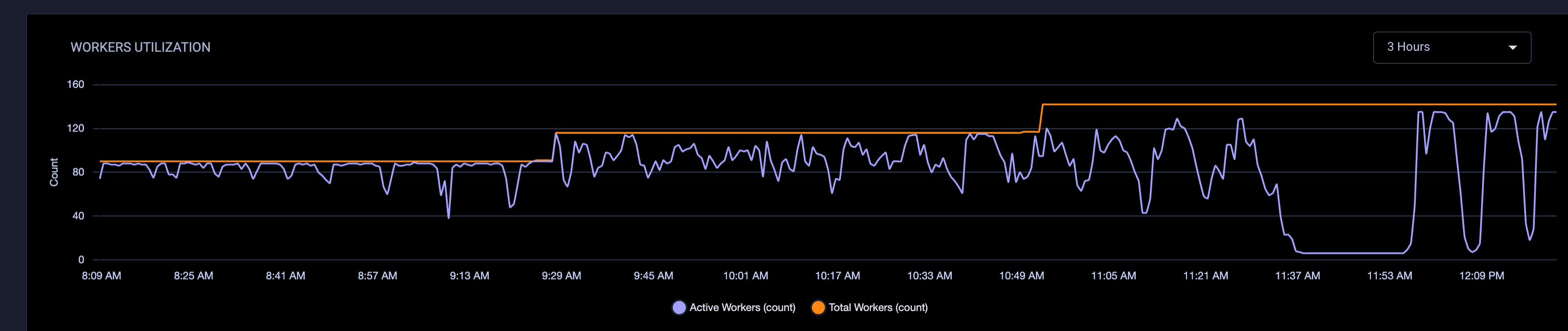
Slalom sped up model development and reduced setup overhead, empowering a small team to deliver big results.
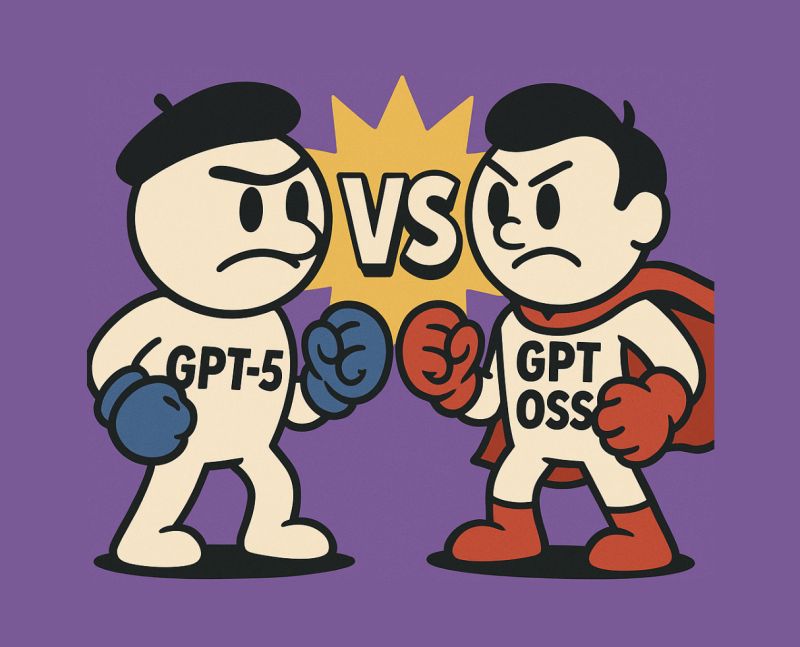
I put OpenAI’s newest models, GPT-5, GPT OSS 120B, and GPT OSS 20B, head-to-head on a real production fraud detection task. The goal was to find the fastest model that doesn’t sacrifice accuracy..
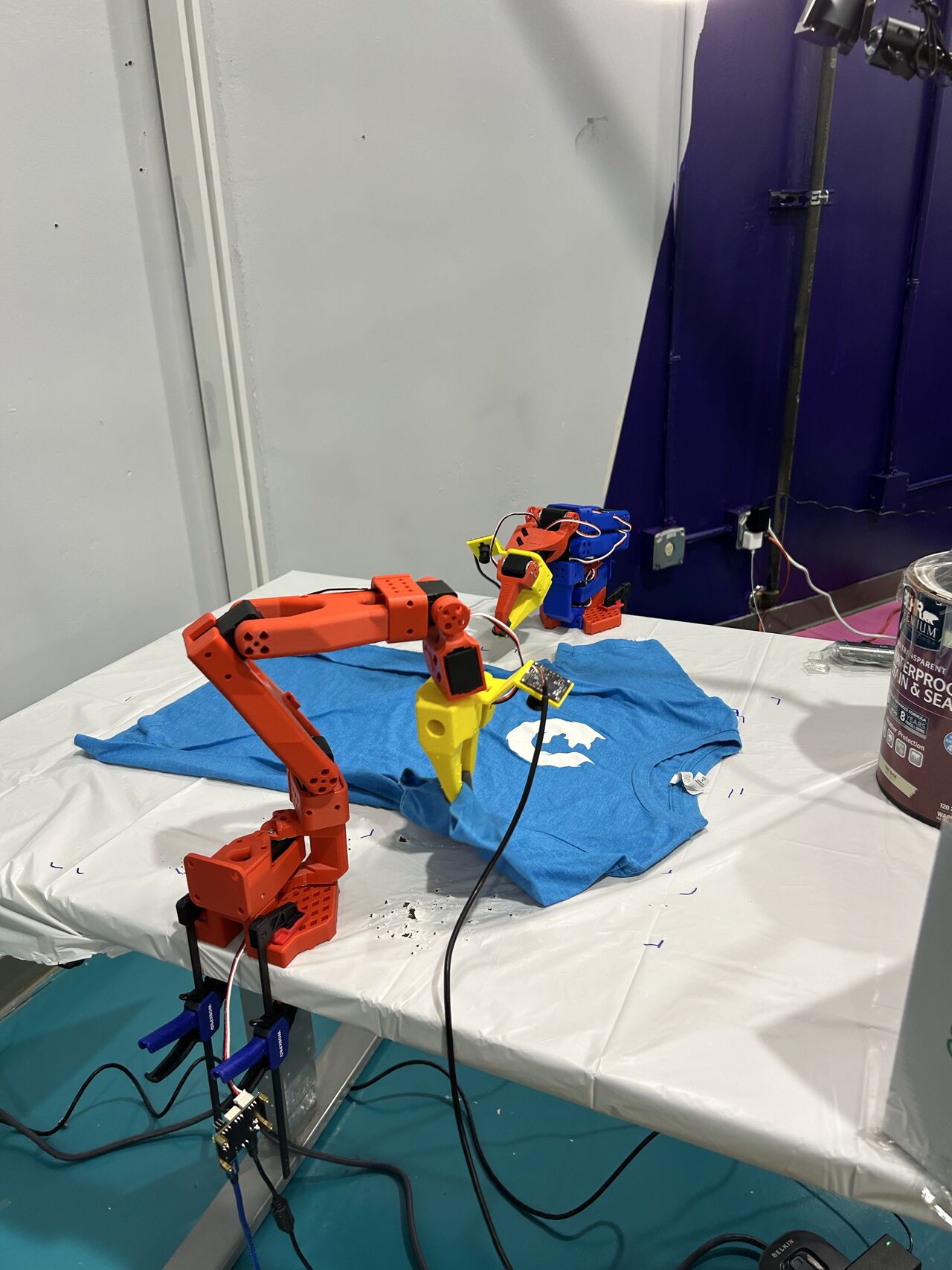
A three-person team taught a robot arm to fold t-shirts and sort medicine, finishing 1st in the U.S. and 2nd globally, all built on Lightning AI.
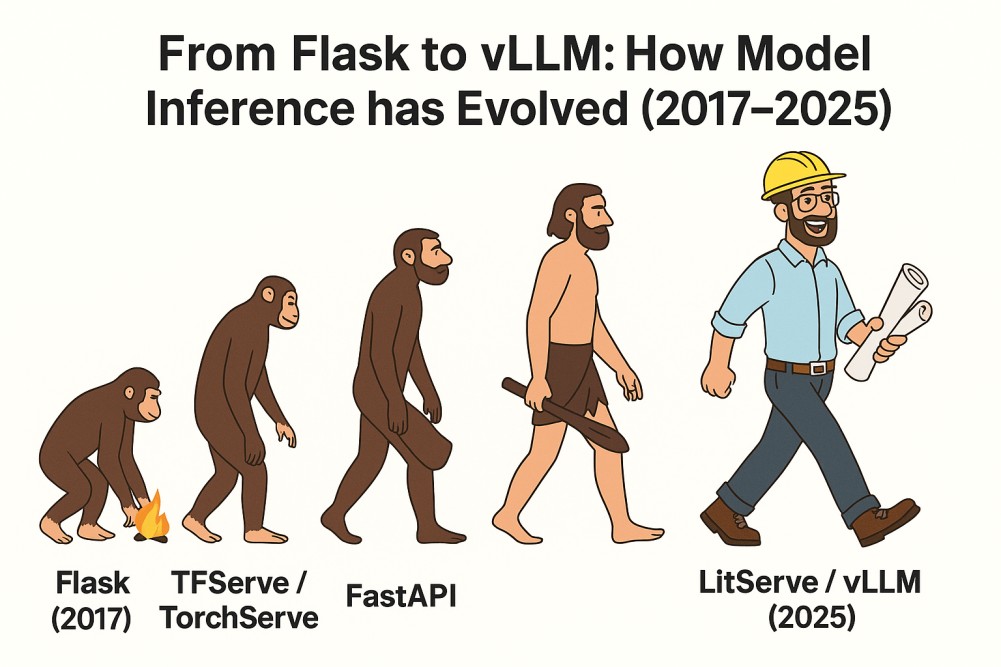
. from Flask chatbots to full AI systems. In this post, I share what’s changed in the model inference world, what’s worked for me, and how I think about serving models in 2025.
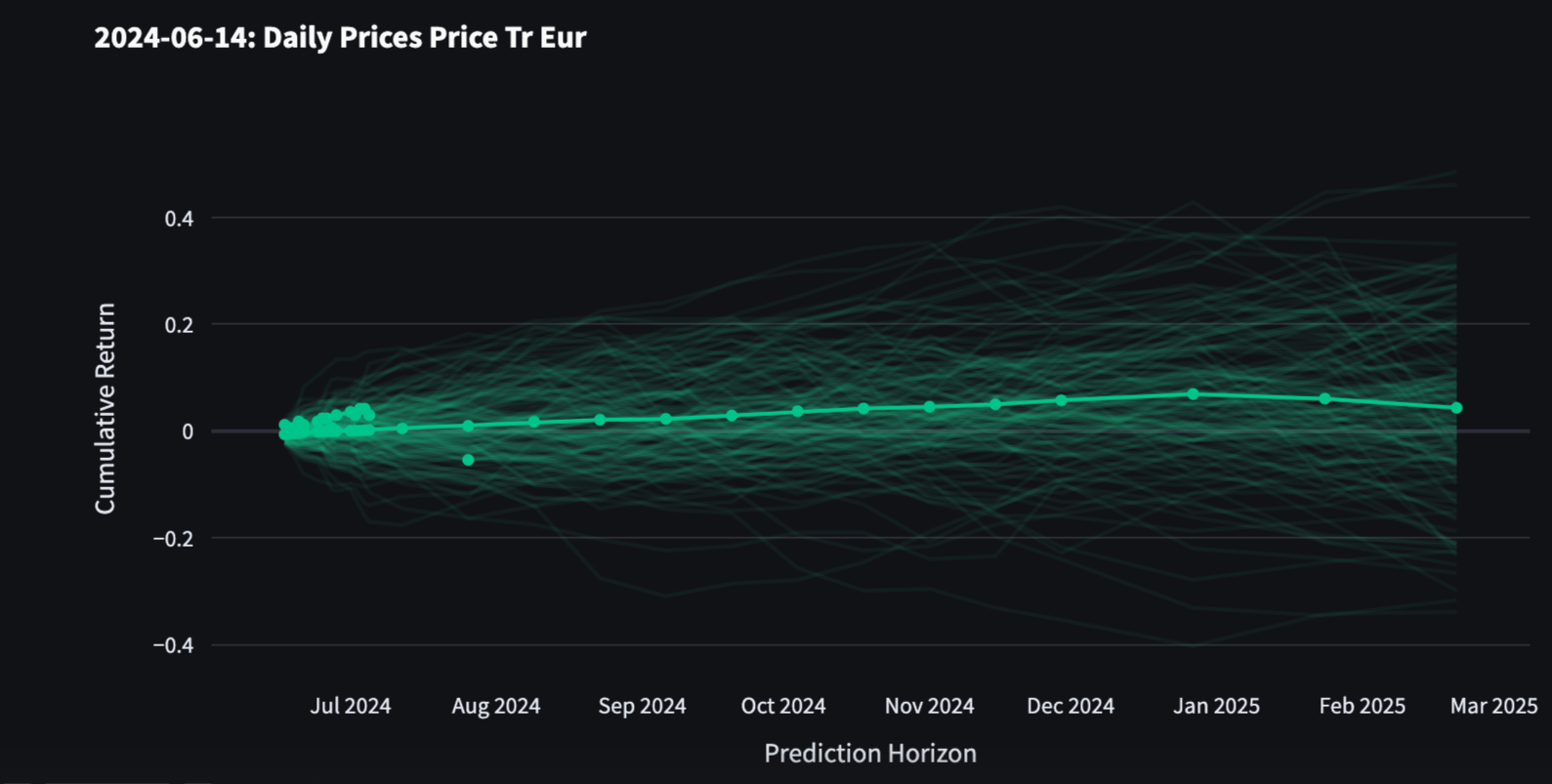
A hedge fund startup simplified infrastructure and focused on strategy, saving time and money with Lightning AI.
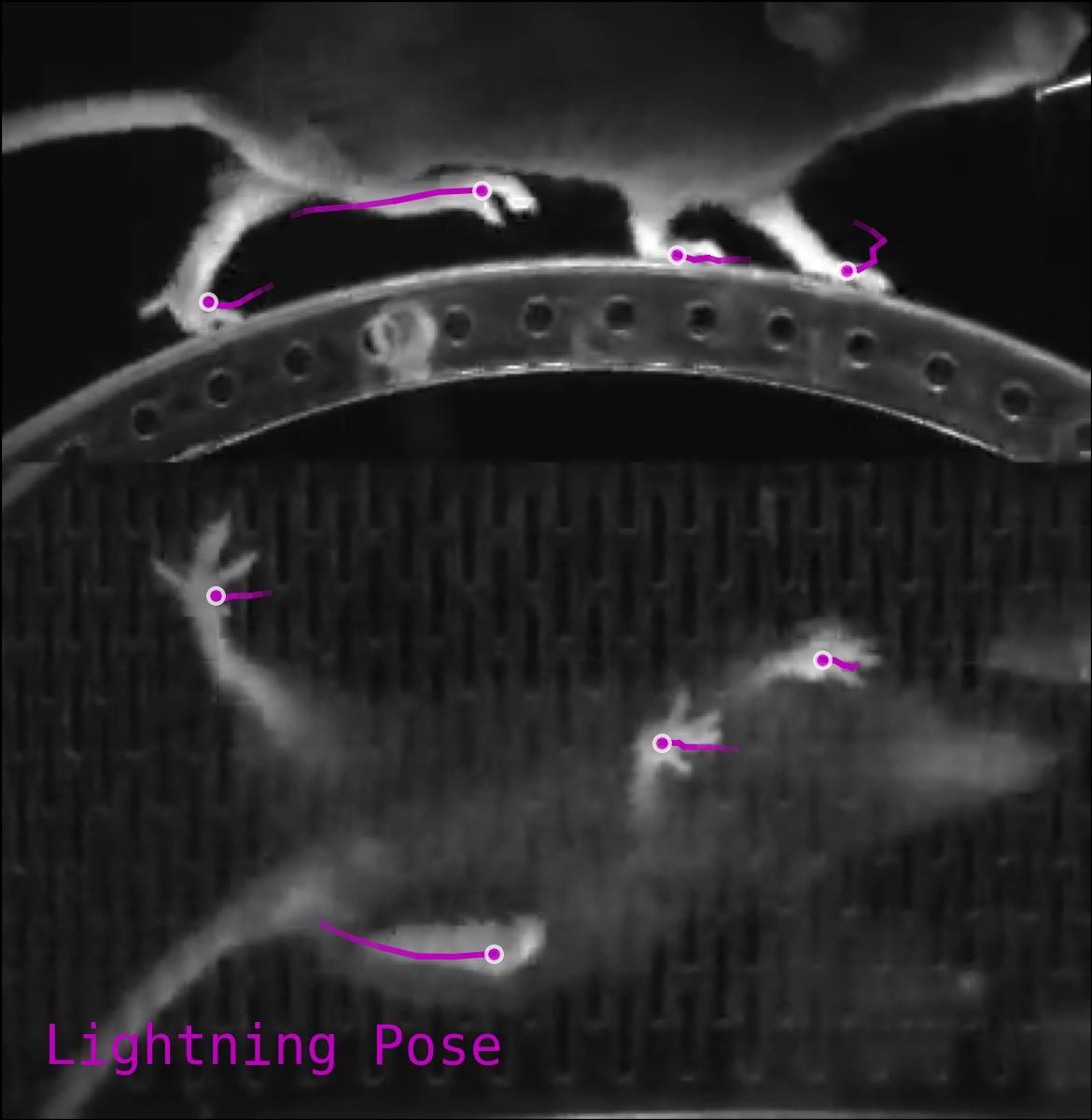
Dr. Matt Whiteway’s team at Columbia University designed and shared their pose estimation tool with labs everywhere, without installation, GPU setup, or onboarding headaches.
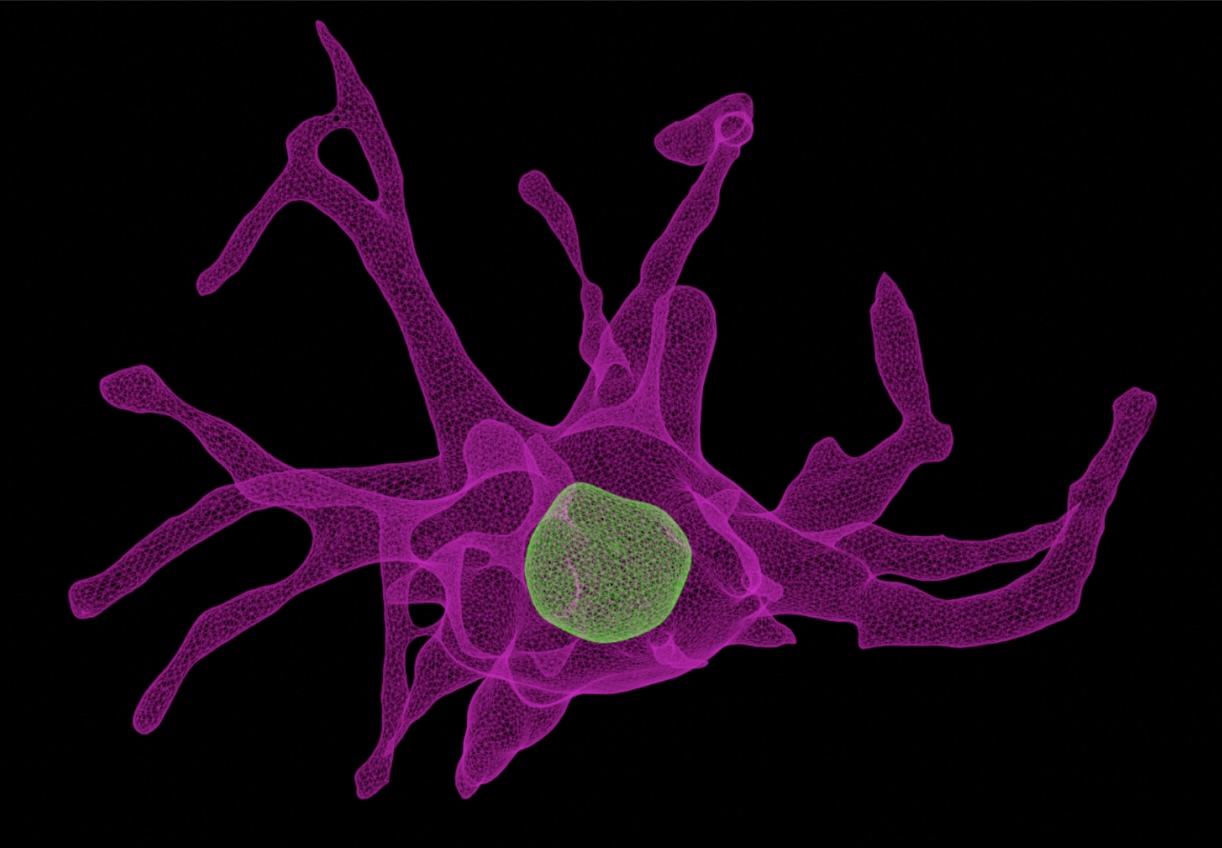
Sentinal4D halved their oncology drug discovery time by optimizing training, simplifying compute access, and improving global team collaboration with Lightning AI.
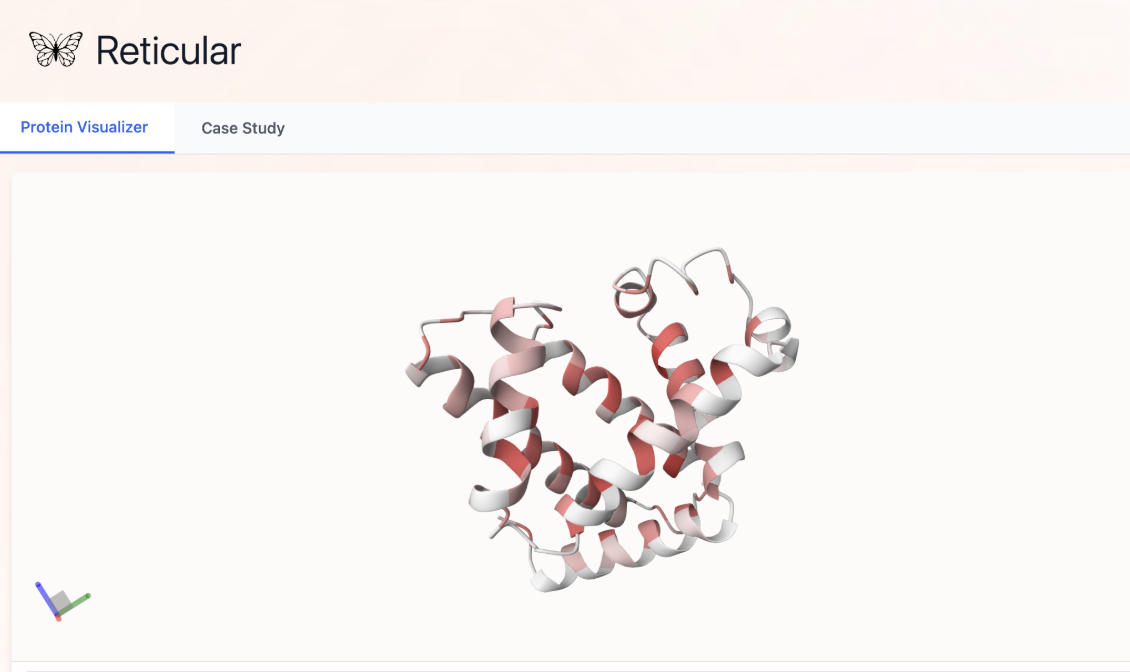
Reticular, a biotech startup, accelerated drug discovery research by simplifying collaboration and speeding up model experimentation
Inworld AI accelerated Voice AI while reducing costs and advancing time-to-market.
An AI startup skipped 5 months of infrastructure work to focus on building what mattered.
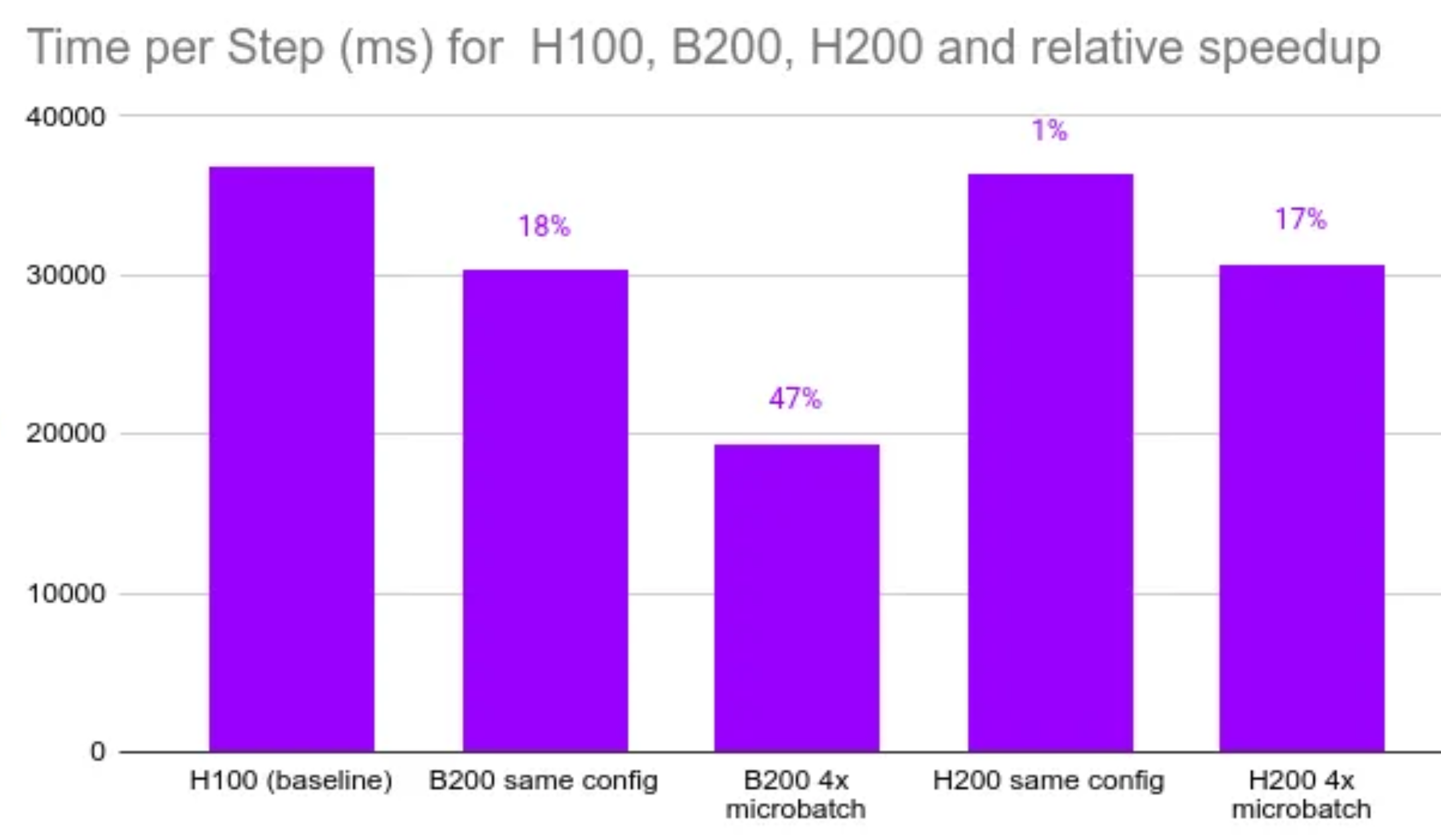
Most teams either overpay for B200s or underuse them. We benchmarked B200 vs H100 to give you a clear, no-fluff guide to making the right call for your next training run.

GenreX is using AI to reinvent how music is made for games, ads, and creators everywhere.

At the Paninski lab at Columbia University, researchers trained 1,000 AI models in just 2 weeks to accelerate research that connects animal movement to brain activity and brings us closer to
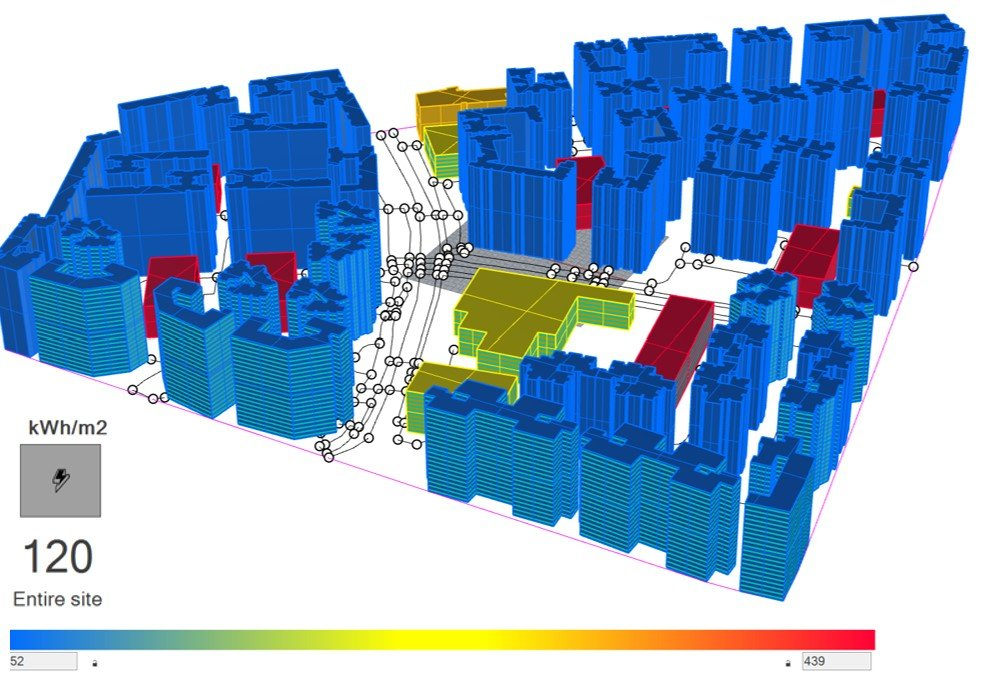
MIT’s sustainability lab helps cities plan and reduce their carbon footprint with AI.
Company Joins International Community of AI Organizations, Led by IBM and Meta, That Includes Leading Startups, Academia, Research and Government Organizations
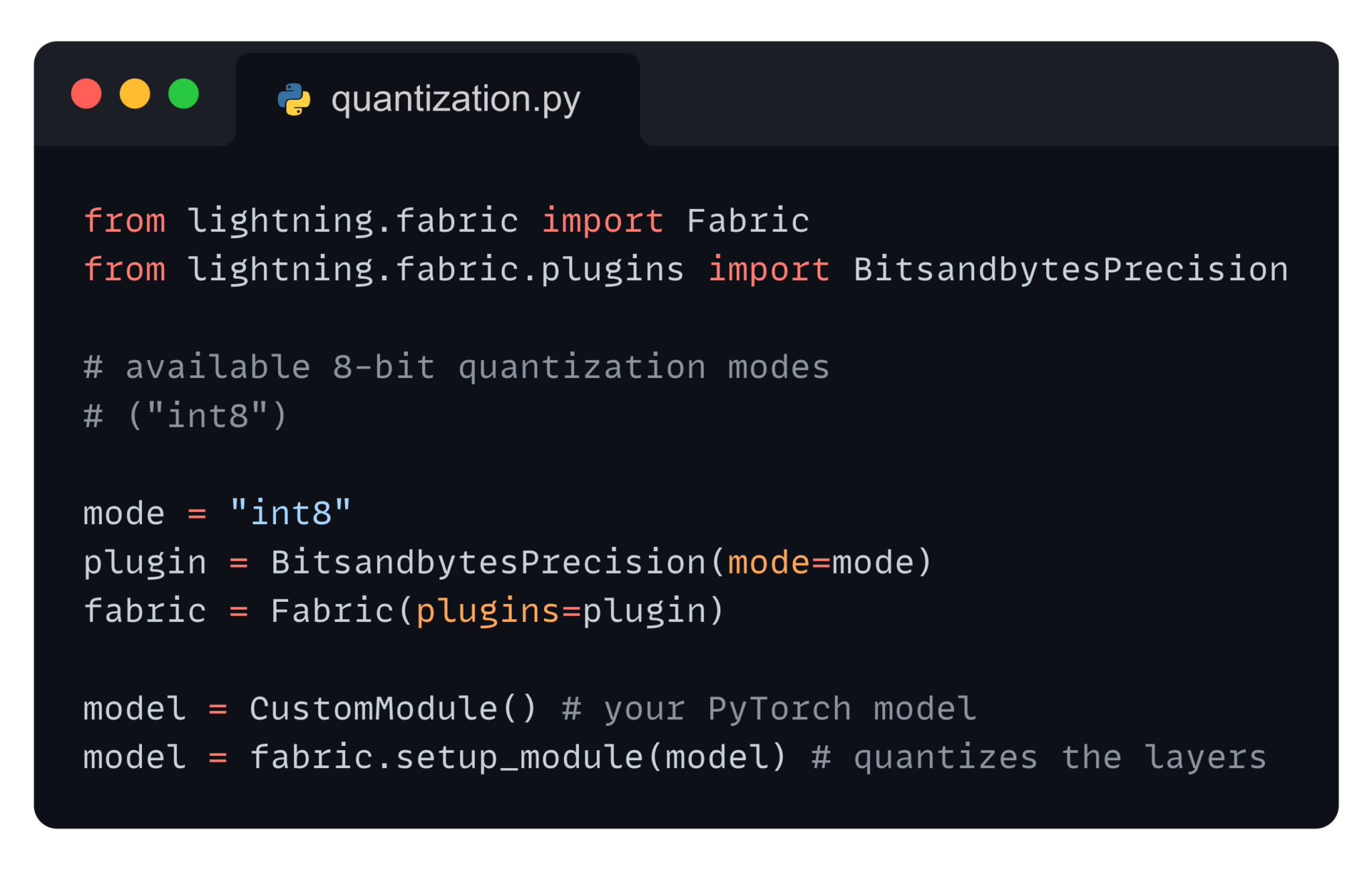
Learn how to shrink massive models like Llama 2 and SDXL with a single line of code using Lightning Fabric’s 8-bit quantization plugin.
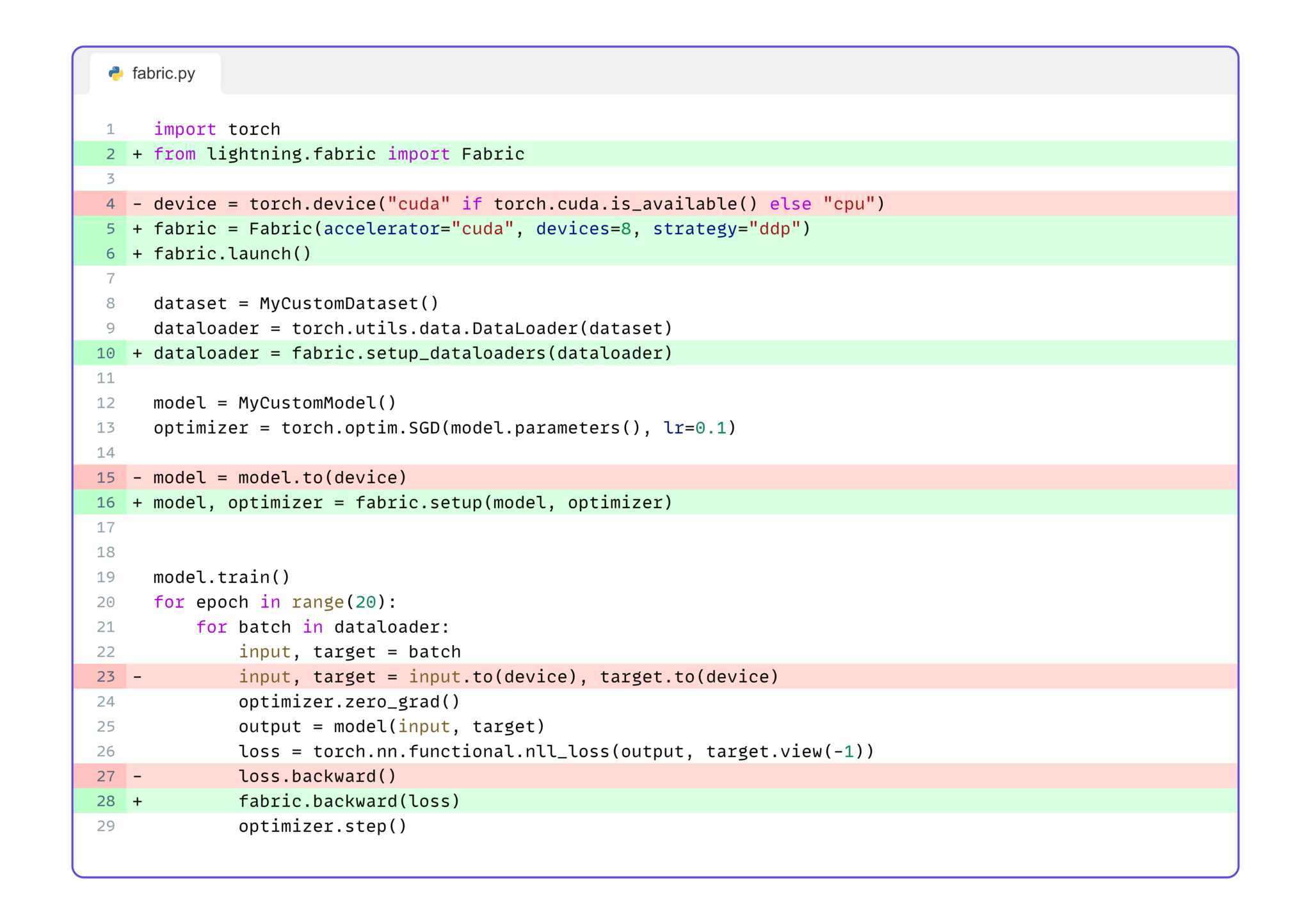
Scaling raw PyTorch is painful: too much boilerplate, too many edge cases. PyTorch Lightning can feel too opinionated when you want full control.
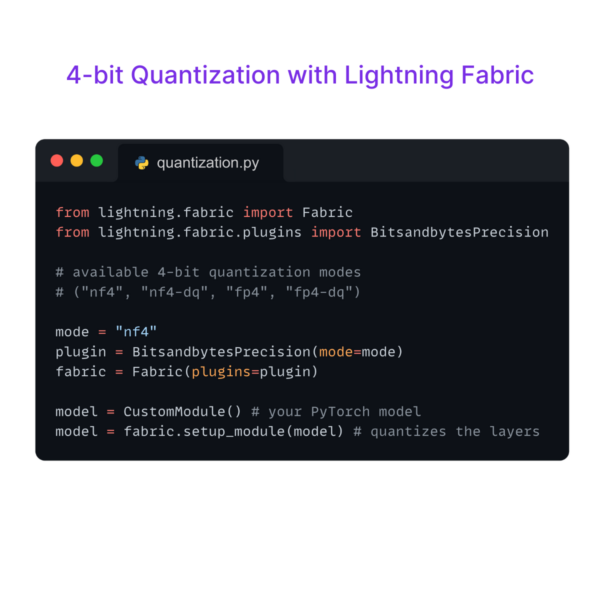
Readers will learn the basics of Lightning Fabric’s plugin for 4-bit quantization.
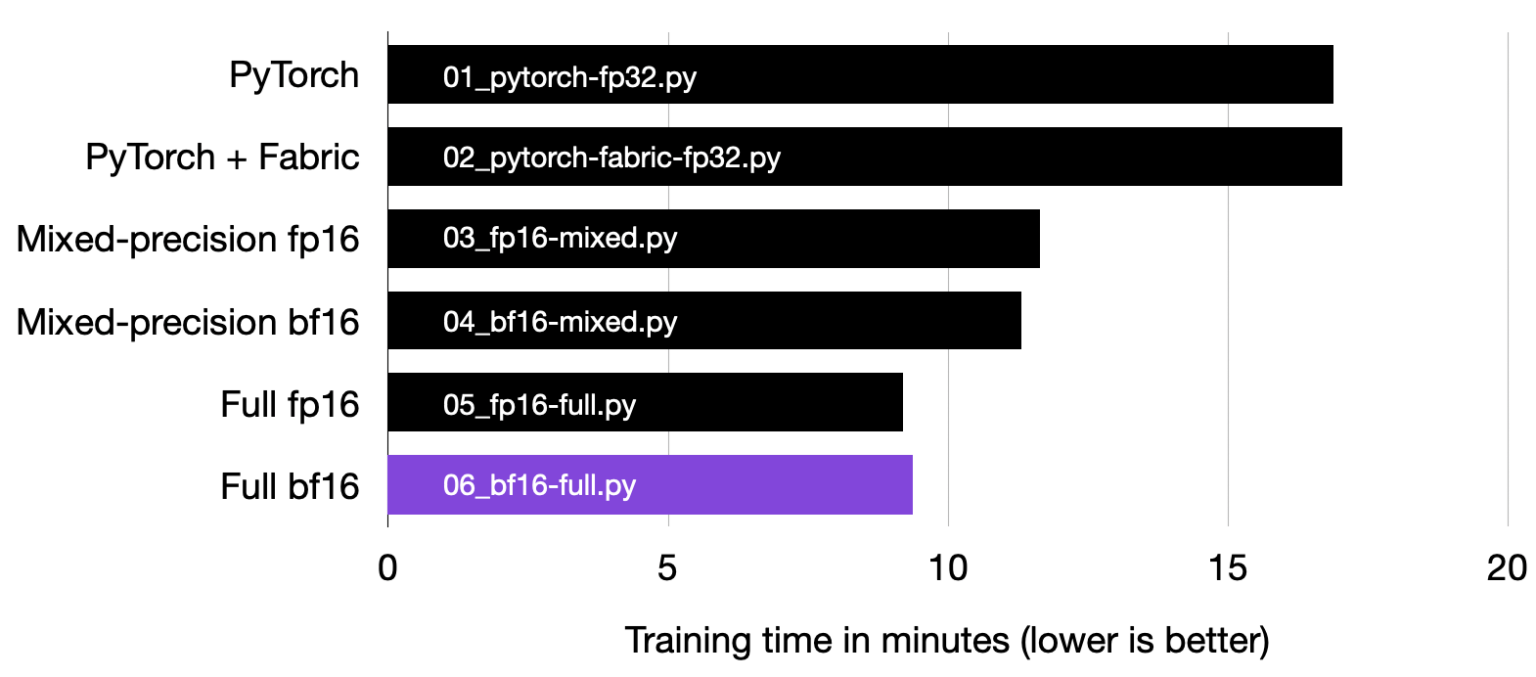
This guide targets PyTorch model training, illustrating how you can adjust the floating point precision to drastically enhance training speed and halve memory consumption, all without compromising
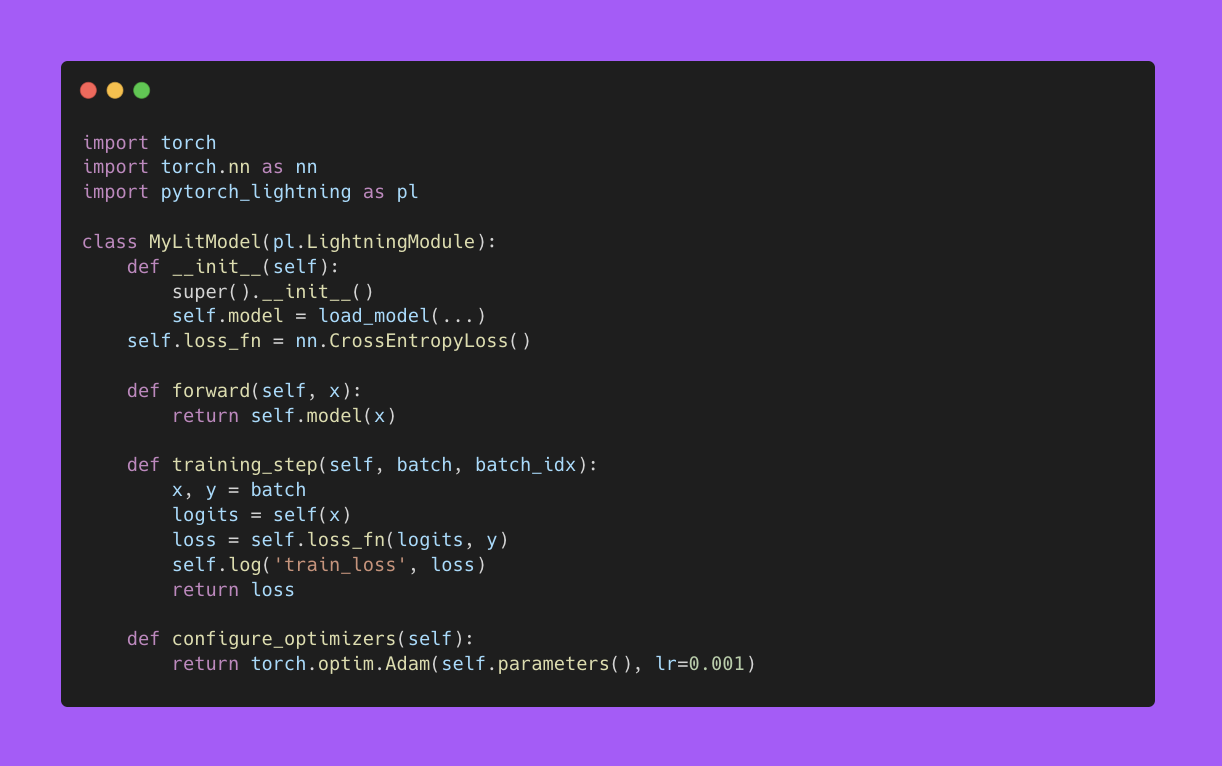
Training deep learning models in raw PyTorch gets repetitive fast. This walkthrough trains a CIFAR-10 image classifier with PyTorch Lightning, plus loggers and callbacks.
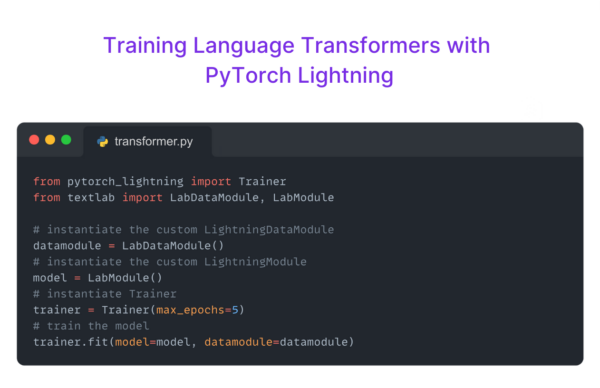
You’ll learn to use PyTorch Lightning’s Core API features by completing an applied project to train a Language Transformer written in PyTorch on the WikiText2 dataset.
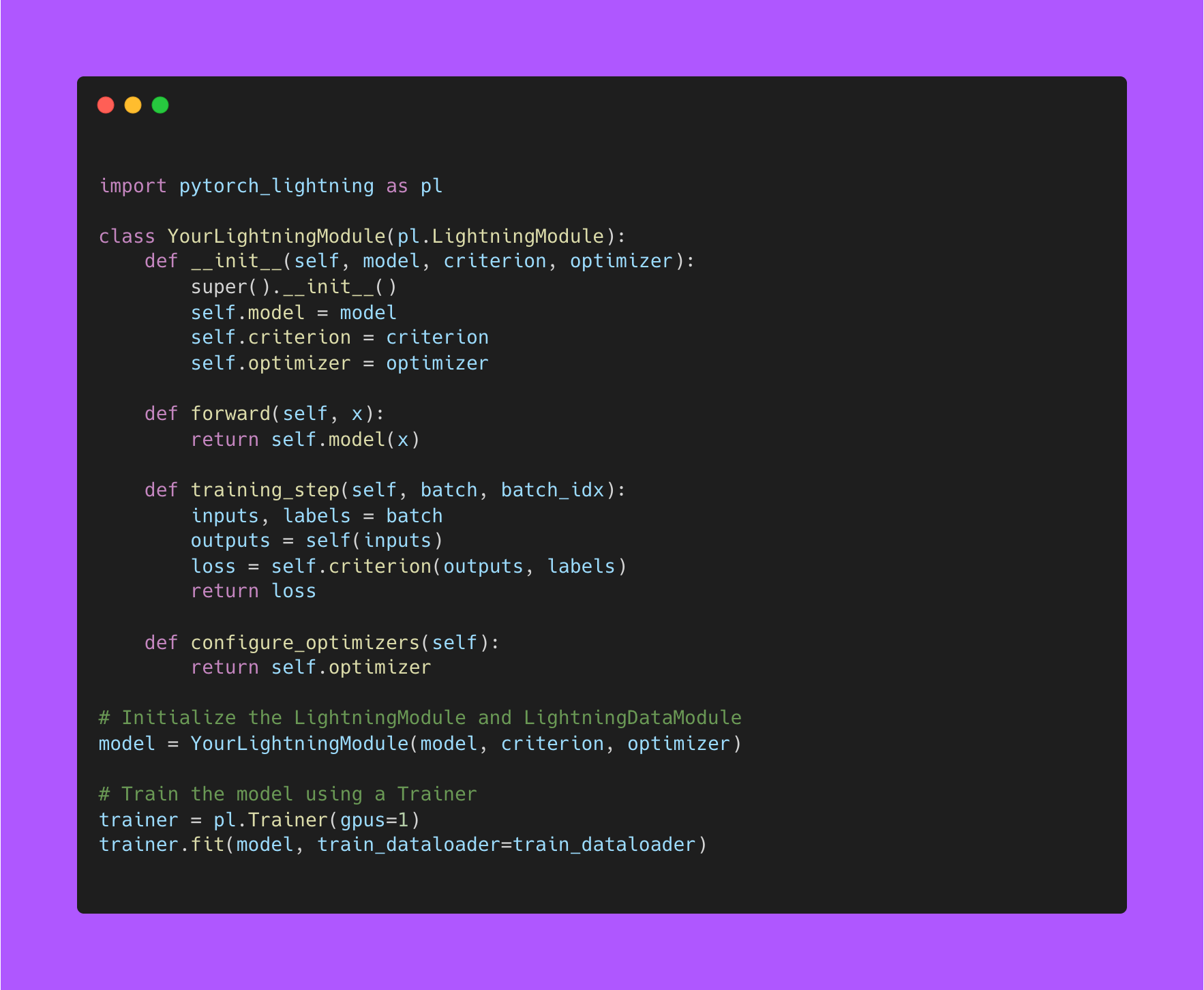
Managing training loops, device placement, logging, and scaling in raw PyTorch quickly becomes tedious and error-prone as projects grow.
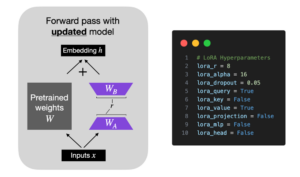
LoRA is one of the most widely used, parameter-efficient finetuning techniques for training custom LLMs.
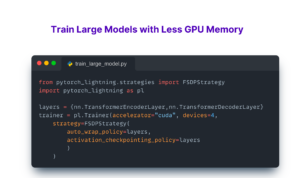
In this blog, you will learn about techniques to train large models like Llama (or any LLM) and Stable Diffusion using distributed training strategy FSDP with PyTorch Lightning.
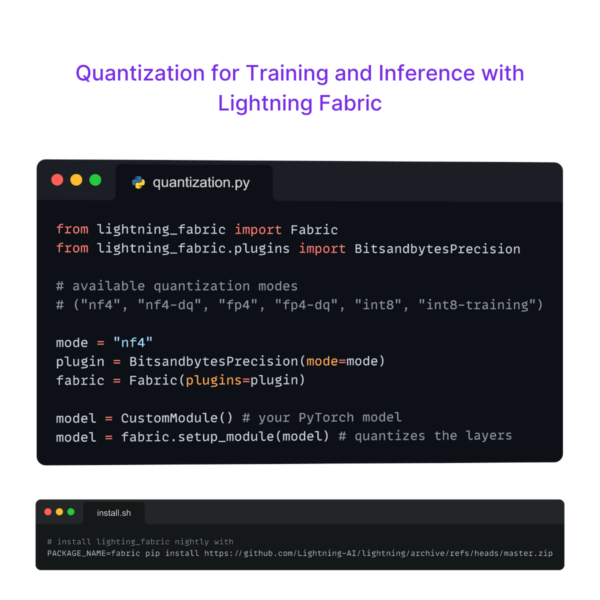
Learn how quantization reduces the memory footprint of models like Llama 2 as much as 4x!
What clustering is, why it’s a useful measure, and newly added metrics that can be used with code samples.
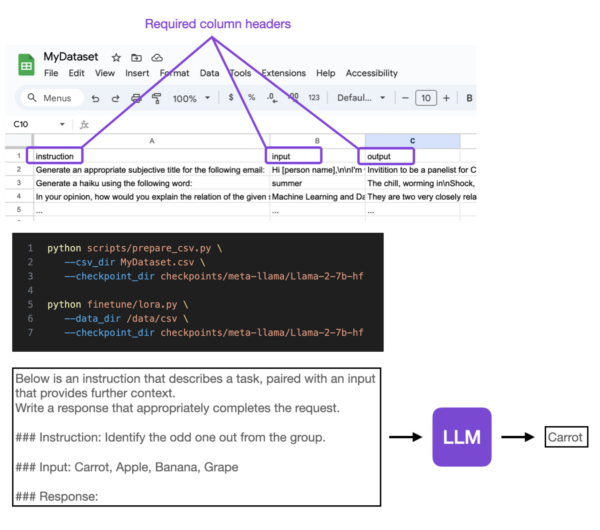
Discover new research directions to improve Large Language Models (LLMs) and learn how to enhance the performance of instruction-finetuned LLMs by concentrating on higher-quality data and exploring
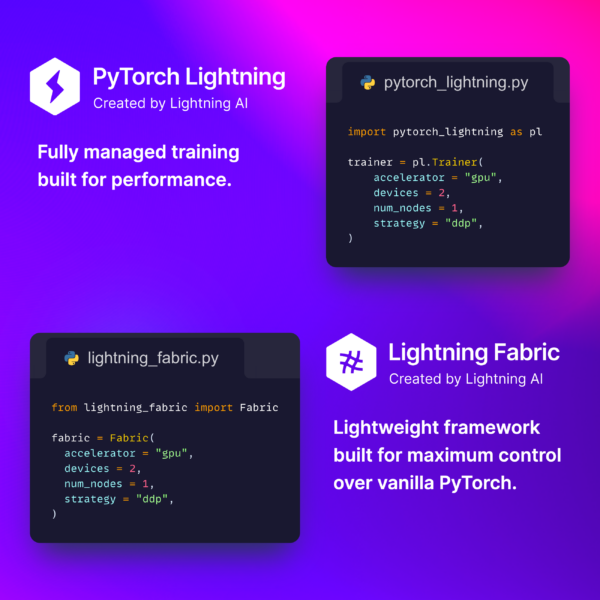
Discover how to use PyTorch Lightning or Lightning Fabric to pretrain your custom model checkpoints or finetune LLMs like CodeLLaMA and LLama 2.
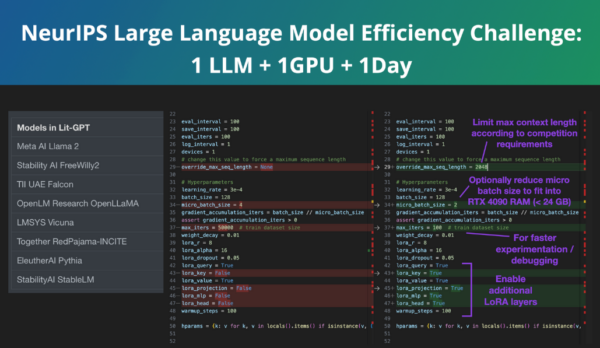
Large language models (LLMs) offer one of the most interesting opportunities for developing more efficient training methods.
We are excited to share that PyTorch Lightning continues to power Generative AI research for training large foundation model, SDXL from Stability AI, by simplifying distributed training for massive
In this blog, we’ll learn how to build a chatbot using open-source LLMs. We will be using Lit-GPT and LangChain. Lit-GPT is an optimized collection of open-source LLMs for finetuning and inference.
Finetune Lit-GPT on 1 GPU in 1 day and get a chance to win a speaker slot at NeurIPS 2023.
Learn how to gain back research time by leveraging PyTorch Lightning for over 100 inbuilt methods, hooks, and flags that save you engineering hours on heavy lifts like distributed training in
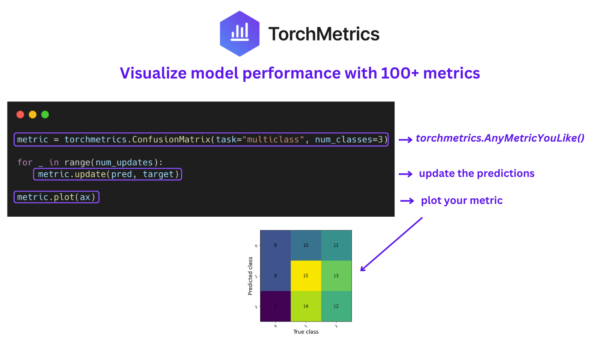
As a celebration of v1.0.0 of Torchmetrics being released, in this blogpost we will discuss the history of Torchmetrics and how the interface have evolved over time.
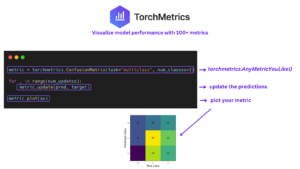
0, is now publicly available.0, we have also managed to implement over 100 metrics in torchmetrics. In this blogpost we go over some of the new features and improvements to the library.
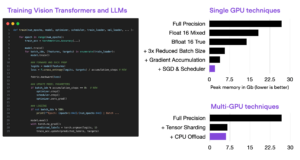
Peak memory consumption is a common bottleneck when training deep learning models such as vision transformers and LLMs.
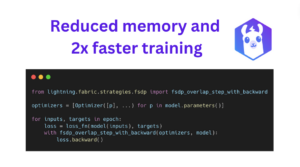
A generic four line code change can reduce peak memory by 20-40% when training large models.
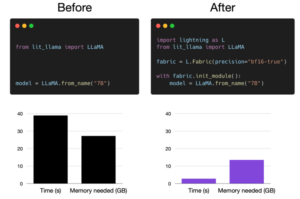
One of the challenges with LLMs is their cost and large memory footprint.1 release, we introduce new features that optimize all three stages of LLM usage: pretraining, finetuning, and inference!
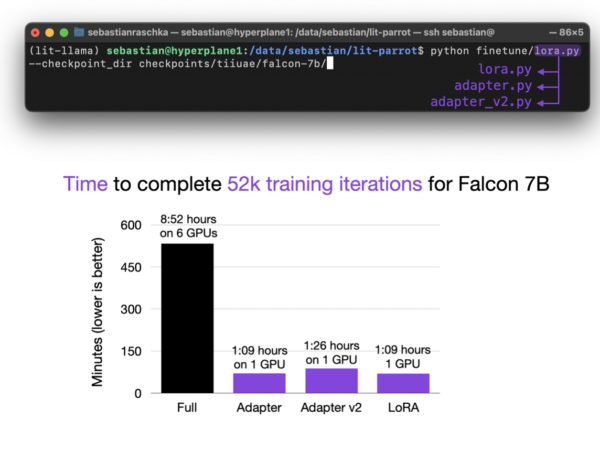
Using parameter-efficient finetuning methods outlined in this article, it’s possible to finetune an open-source LLM like Falcon in 1 hour on a single GPU instead of a day on 6 GPUs.
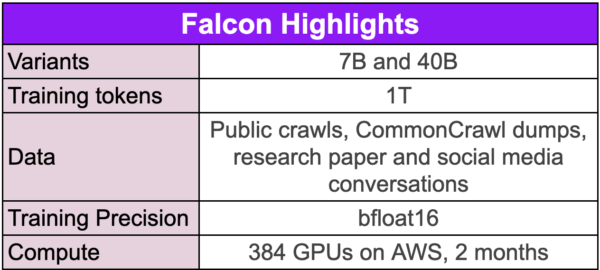
In this blog you will learn about the latest open-source large language model Falcon.5 GB of GPU memory!

Learn how to gain the technical skills to break into AI after a successful military career.
Our community member Luca Medeiros shows how he leveraged the Segment Anything Model from Meta AI and built his lang-segment-anything library for object detection and image segmentation based on text
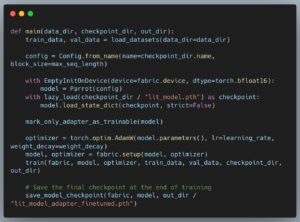
Learn how to finetune large language models (LLMs) on a custom dataset. We will be using Lit-GPT, an optimized collection of open-source LLMs for finetuning and inference.
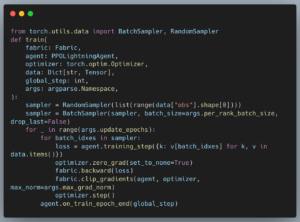
Learn how to build and train a Reinforcement Learning model with PyTorch and Lightning Fabric.
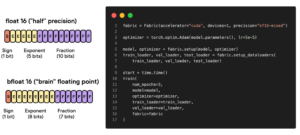
Training and using large language models (LLMs) is expensive due to their large compute requirements and memory footprints.
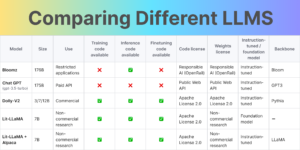
Large Language Models (LLMs) are taking center stage, wowing everyone from tech giants to small business owners.
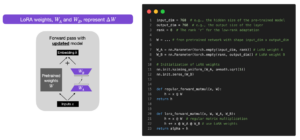
In the rapidly evolving field of AI, using large language models in an efficient and effective manner is becoming more and more important.
Learn about the variety of ways to contribute to Lit-LLaMA, Lightning AI’s open-source rewrite of LLaMA.
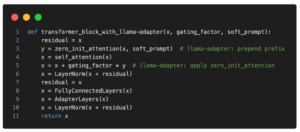
Learn how popular parameter-efficient finetuning methods for LLM work: prefix tuning, adapters, and LLaMA-Adapter.
In this tutorial, we will learn how to train and fine-tune LLaMA (Large Language Model Meta AI). Lit-LLaMA, a rewrite of LLaMA, can run inference on an 8 GB consumer GPU.
With Lit-LLaMA, our goal is to provide a clean, fully open, non harmful implementation of the LLaMA source code that can be rapidly developed alongside the community.

Contributing to open-source projects is a great way to improve your coding skills
Learn how to use gradient accumulation to train models with large batch sizes in order to work around hardware limitations when GPU memory is a concern.
In this tutorial, we will finetune a DistilBERT model, a distilled version of BERT that is 40% smaller at almost identical predictive performance

Use Lightning Fabric to train and accelerate a PyTorch model using mixed precision and distributed training.
Lightning Fabric is a new, open-source library that allows you to quickly and easily scale models while maintaining full control over your training loop.
How to use PyTorch 2.0 and train a compiled model with PyTorch Lightning 2.0. Find the full code used in this tutorial here.

PyTorch 2.x aims to push the performance with model compilation further while maintaining its Pythonic nature and backward compatibility.
Today, we’re introducing PyTorch Lightning 2.0—as well as Fabric, a new library—to continue unlocking unprecedented scale, collaboration, and iteration for researchers and developers.

Answers to common questions about PyTorch Lightning 2.0: what changed, what is simpler, and what Lightning Fabric adds for finer control.

OpenAI is creating an entirely new class of generative models for images, and researchers are wondering how language models do in-context learning.

Developers can now integrate ChatGPT and Whisper models into their apps and products through OpenAI’s API. Microsoft researchers introduced Kosmos-1, a MLLM that claims to solve IQ tests.
A discussion of various techniques that you can use to get the most out of your deep learning models.
Be the First to Hear About What is Launching on March 15th! We’ve been hard at work implementing user feedback into the next release of PyTorch Lightning, and we’re excited to unveil it on March 15th.
Posted on February 28, 2023 by Aniket Maurya & Ayush Chaurasia - Community , Tutorials
Can intentionally poisoning web-scale training datasets be a practical approach to preventing risk? How can model predictions and their intended usage be better aligned?
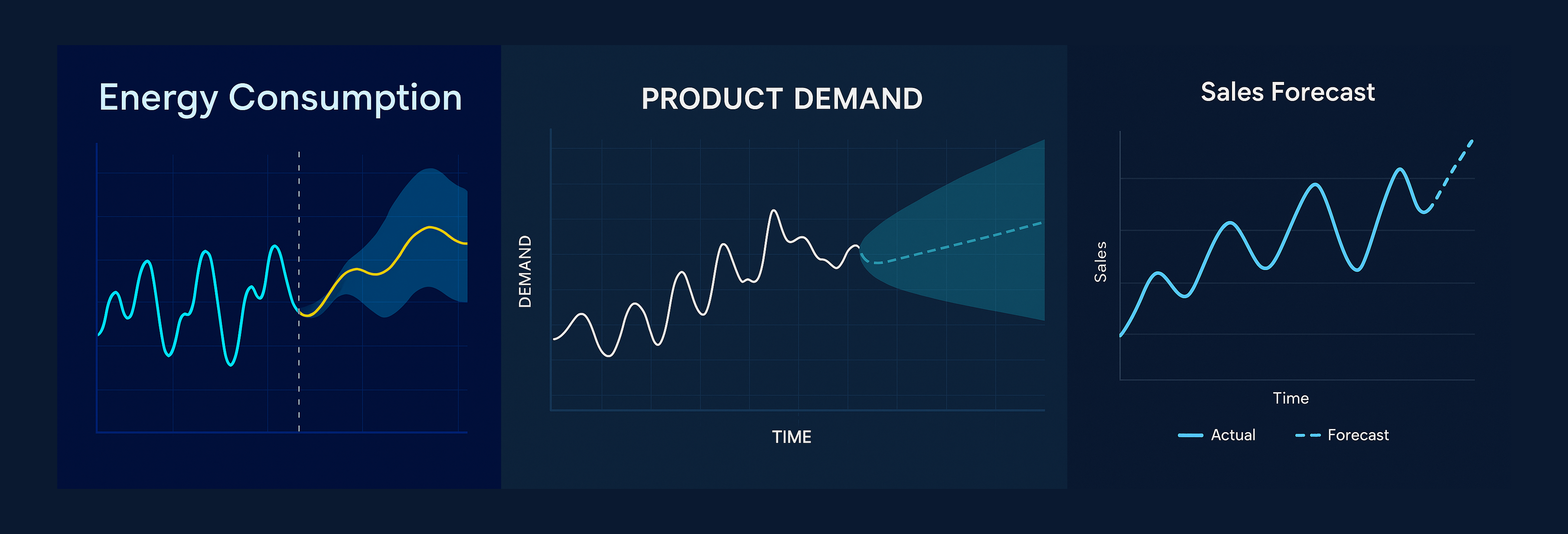
Nixtla's new pretrained AI models let you forecast the future with almost no historical data.
ML twitter is in a flurry over ToolFormer, a model that is getting LLMs to use tools in a self-supervised manner.
The battle of the chatbots continues with Bard’s reception peaking and falling in a single week while Bing’s new interface is causing a flurry of excitement.
Learn how to accelerate serving models with sequential inference steps, like Stable Diffusion.
Researchers are raising a flag about the privacy risks of the latest diffusion models and the AI detection model created by Princeton student is now GA.
As machine learning models continue to gain widespread adoption in industries ranging from healthcare and manufacturing to retail and logistics, it has become increasingly important that we evaluate
Researchers are hoping watermarking language models can help stop plagiarism while LAION and CarperAI are helping the public replicate ChatGPT on their own.
Serving large models in production with high concurrency the ability to serve multiple simultaneous inference requests and throughput

Thanks to researchers from DeepMind, you can now build your own transformer models from scratch!
Lightning을 이용하여 어떻게 모델 훈련 및 배포 파이프라인을 만들 수 있는지 배웁니다. 해당 파이프라인은 커스터마이징 할 수 있고, monitoring, data warehouse, feature store 등 여러 기능과 통합되어 있으며, production에 배포되어 있습니다.
The scale of machine learning datasets can often become large enough that migrating to a cloud provider for training, storing checkpoints, and logs becomes necessary.
Researchers demonstrate surprising differences in causality-based localization vs. knowledge editing in language Models.
Can we we compress large language models for better performance? Can we rethink LLM processing? These are just a few of the questions researchers are asking themselves in the new year.
For this special end-of-year edition of our newsletter, we are poopin’ on parades and kicking over crystal balls. Here is what we’re betting won’t happen in the coming year:
How to scale model serving in production with dynamic batching and autoscaling.
Learn how you can use Lightning to build a model training and deployment pipeline that is customizable, integrated with tools (like monitoring, data warehouses, and feature stores), and deployed in

Researchers in France have identified the four sub-phenotypes of long COVID while researchers in the US just released the largest federated ML effort to date.
A New ML Model, a New Startup Opportunity — give Echo, our free transcription app powered by OpenAI’s Whisper, a try!
Researchers are testing the limits of language models and datasets while diffusion models continue to evolve.0 on your own servers and have a surprisingly human conversation with OpenAI’s ChatGPT.
Robot dogs and LLMs are getting more capable. NVIDIA and Microsoft team up on an AI supercomputer, and Meta releases Galactica.
This Russian-language blog post, completed by a member of the Lightning community, is a translation of the English original
Researchers are improving audio quality with real-time target sound extraction and complex music mixing.
Meta AI’s researchers are celebrating the release of an open atlas of 617 million metagenomic protein structures, AI is being deployed to forecast satellite failures in orbit, and developers can now
We’re excited to announce the release of Lightning 1.8 ⚡️ (release notes).

RThis week, researchers are improving the audio quality of your streaming services and continuing to improve reinforcement learning algorithms.

In this tutorial, you’ll learn how to scale models and data across multiple devices using distributed training.

Researchers continue to push the limits of diffusion models, Steve Jobs returns for a conversation with Joe Rogan and Jack Dorsey’s new decentralized social network is open for beta users.

Lightning is handing out the blueprints of Stable Diffusion and researchers are helping AI become better at cooperating with humans in strategic game play.
In this tutorial, you’ll learn how to deploy diffusion models at scale and build a text-to-image generator

This week, the announcement of several text-to image, voice and video generation models are delighting researchers and creatives alike.
this tutorial teaches you how to overcome hardware constraints when training large models using PyTorch’s new model sharding strategy
The Lightning App built with NVIDIA Omniverse Replicator (try it for free today!) lets you generate synthetic data to enhance the training and performance of your AI models.

Can a single policy control the movement of hundreds of different robots? Is it possible to make 3D mapping more accurate and cheaper at the same time?
this tutorial shows you how to train models faster with Apple’s M1 or M2 chips.
Today, I’m thrilled to share that Mike Ruberry, one of PyTorch’s core technical leads, will be joining Lightning.
We’re excited to announce the release of PyTorch Lightning 1.7 ⚡️ (release notes!)
6 with support for Intel’s Habana Accelerator, new efficient DDP strategy (Bagua), manual Fault-tolerance, and other stability and reliability changes.
Start using the Omniverse Replicator Lightning App for free today. At SIGGRAPH , NVIDIA and Lightning AI debuted the beta of the Omniverse Replicator Lightning App .
Today, we’re excited to announce four senior executive hires who will enable us to advance our mission of accelerating an AI-powered world.
How to use Redis in a database system for machine learning applications
At June’s inaugural Lightning Developer Conference, Lightning AI’s Staff Product Manager Eden Afek explored how you can bring your machine learning models to life through AI-powered Lightning Apps.
Building and training your deep learning and machine learning models is great, but what do you do once you’ve worked out the kinks?

An Easy Way to Demonstrate Your Research A research poster is an attractive visual presentation of research that displays the information in a clear and concise manner.
Our first Storm Chaser challenge series runs July 20 to August 3, 2022. Complete the tasks to win a $1,000 Visa gift card.
Train And Explore Generative Adversarial Networks (GANs) Interactively With Lightning Apps
The Fragmented World of Machine Learning/MLOps At June’s inaugural Lightning Developer Conference, Founder and CEO William Falcon’s keynote explored the state of artificial intelligence, and how it’s
A StatQuest Tutorial When you don’t always have the same amount of data, like when translating different sentences from one language to another, or making stock market predictions from different
What Lightning AI is, how it differs from Grid.ai, and how the open-source Lightning framework fits into the platform.
Grid.ai is now Lightning AI. Here is what the rename means and why we are unifying the AI development lifecycle, along with our $40M funding round.
Apple's M1/M2 chips, known for strong performance and energy efficiency, now support GPU acceleration in PyTorch, and while their GPU RAM usage is higher than CUDA GPUs, training with adjusted batch
SyntheticGestalt, an AI startup based in London and Tokyo, is developing an automatic system to make valuable drug discoveries en masse.
The Grid platform enables users to quickly iterate through the model development life cycle by managing the provisioning of machine learning infrastructure on the cloud.
A StatQuest Tutorial PyTorch is one of the most popular tools for making Neural Networks. This StatQuest walks you through a simple example of how to use PyTorch one step at a time.

How a team at The University of British Columbia was able to quickly train models and obtain results faster than ever before
A Letter From Luca Antiga, Co-Founder and CEO of Tensorwerk Since its inception, Tensorwerk has been about people.
The store of Clutterbot, a New Zealand-based startup that builds autonomous cleaning robots
Using sophisticated machine learning techniques, the AutoDevTech platform accelerates a team’s efficiency by providing valuable insights into their development process in the context of industry

Before discovering Grid, the team managed all their cloud experiments themselves on AWS instances using boto3 scripts and vanilla PyTorch.

In the race to implement machine learning, businesses of all sizes look for more accurate predictions that will allow them to stay ahead and differentiate themselves from the competition.
Grid is a scalable machine learning platform that empowers researchers and data scientists to rapidly iterate on ideas without infrastructure hassles, while also enabling community-driven
Lightning has a technique to add arbitrary self-contained programs to your training which are called callbacks.
Using the EarlyStopping callback, Lightning will automatically stop training once a specific metric has stopped improving.
How Lightning Helps You Reload Your Data on Every Epoch Lightning is a lightweight PyTorch wrapper for high-performance AI research that reduces the boilerplate without limiting flexibility.

How Lightning Helps You With Long Sequences Lightning is a lightweight PyTorch wrapper for high-performance AI research that reduces the boilerplate without limiting flexibility.
How Lightning Identifies Exploding and Vanishing Gradients Lightning is a lightweight PyTorch wrapper for high-performance AI research that reduces the boilerplate without limiting flexibility.
How To Let Lightning Find the Best Learning Rate Lightning is a lightweight PyTorch wrapper for high-performance AI research that reduces the boilerplate without limiting flexibility.
How To Let Lightning Automatically Figure Out Batch Size Lightning is a lightweight PyTorch wrapper for high-performance AI research that reduces the boilerplate without limiting flexibility.
How To Get Started Training With Lightning Lightning is a lightweight PyTorch wrapper for high-performance AI research, that reduces the boilerplate without limiting flexibility.
Lightning AI is excited to announce the release of Lightning 2.1 ⚡.The theme this time around is “bigger, better, faster.”
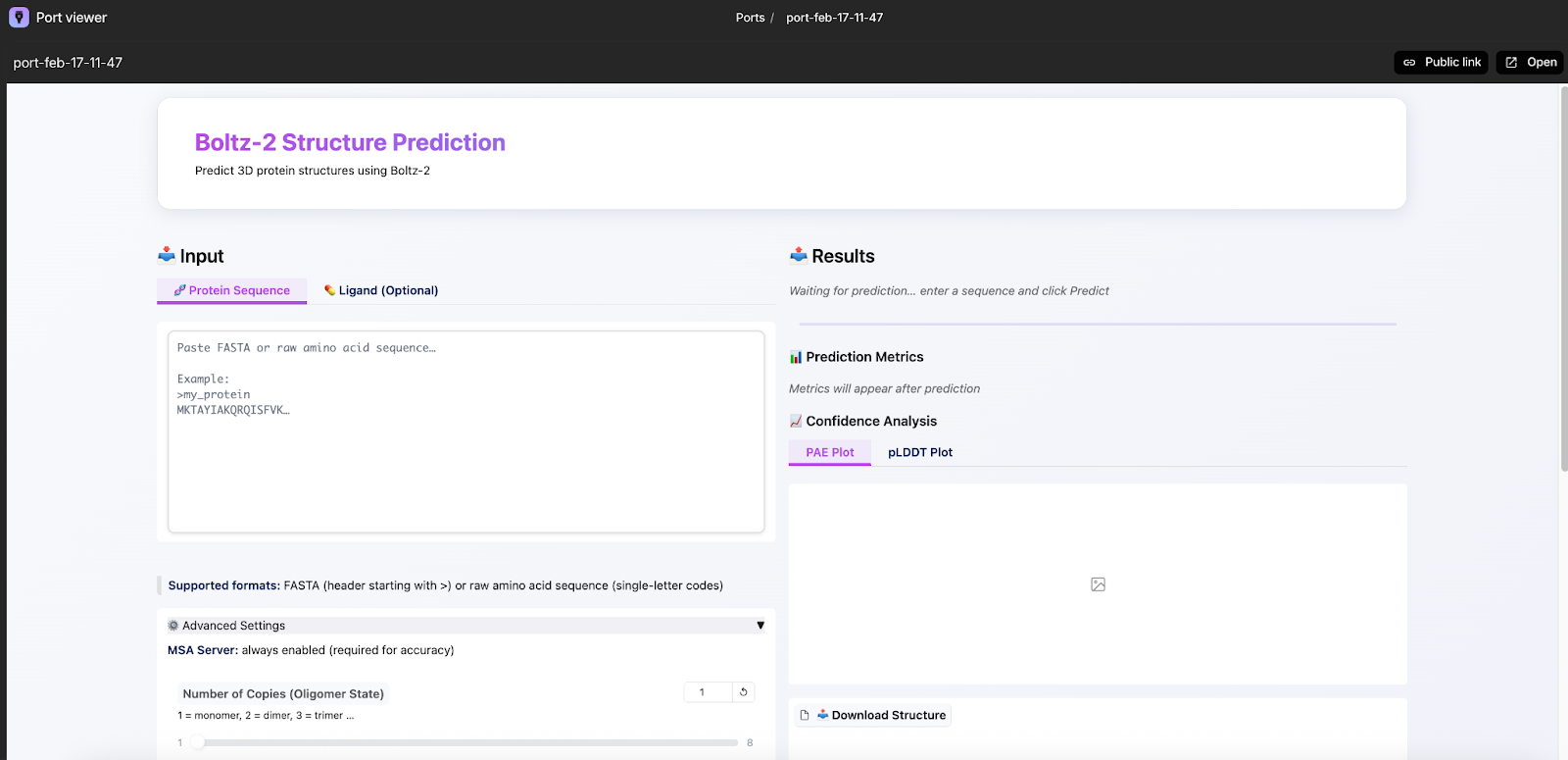
In this blog post, Amir Momen-Roknabadi walks through his efforts to "vibe code" his way into creating an app to run Boltz-2 and deploy it to the Lightning AI platform.
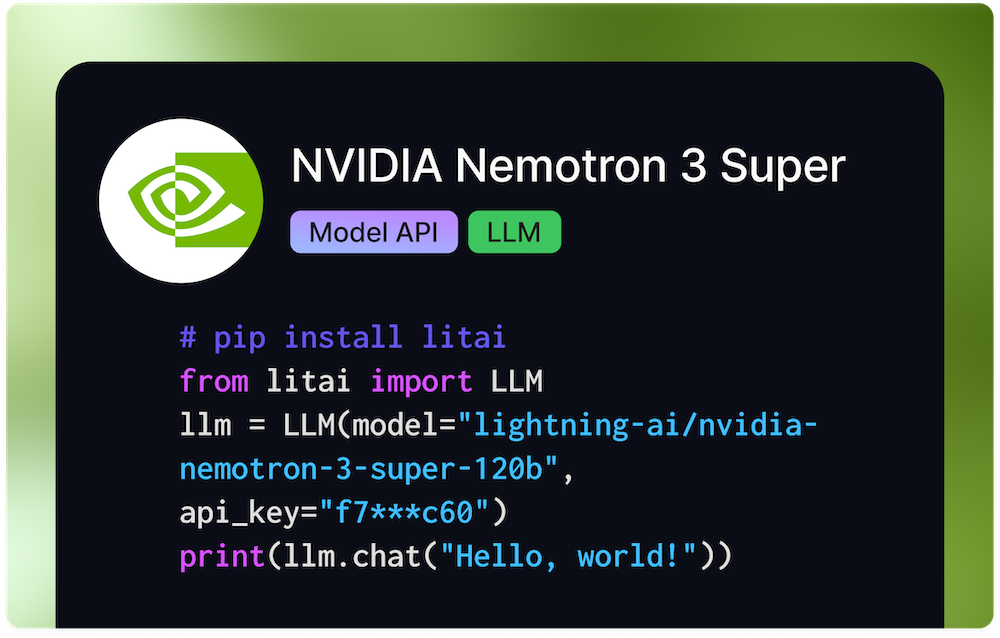
Learn how to build multi-agent systems with NVIDIA Nemotron 3 Super on Lightning.
No blogs yet