
Revolutionizing cancer research with AI
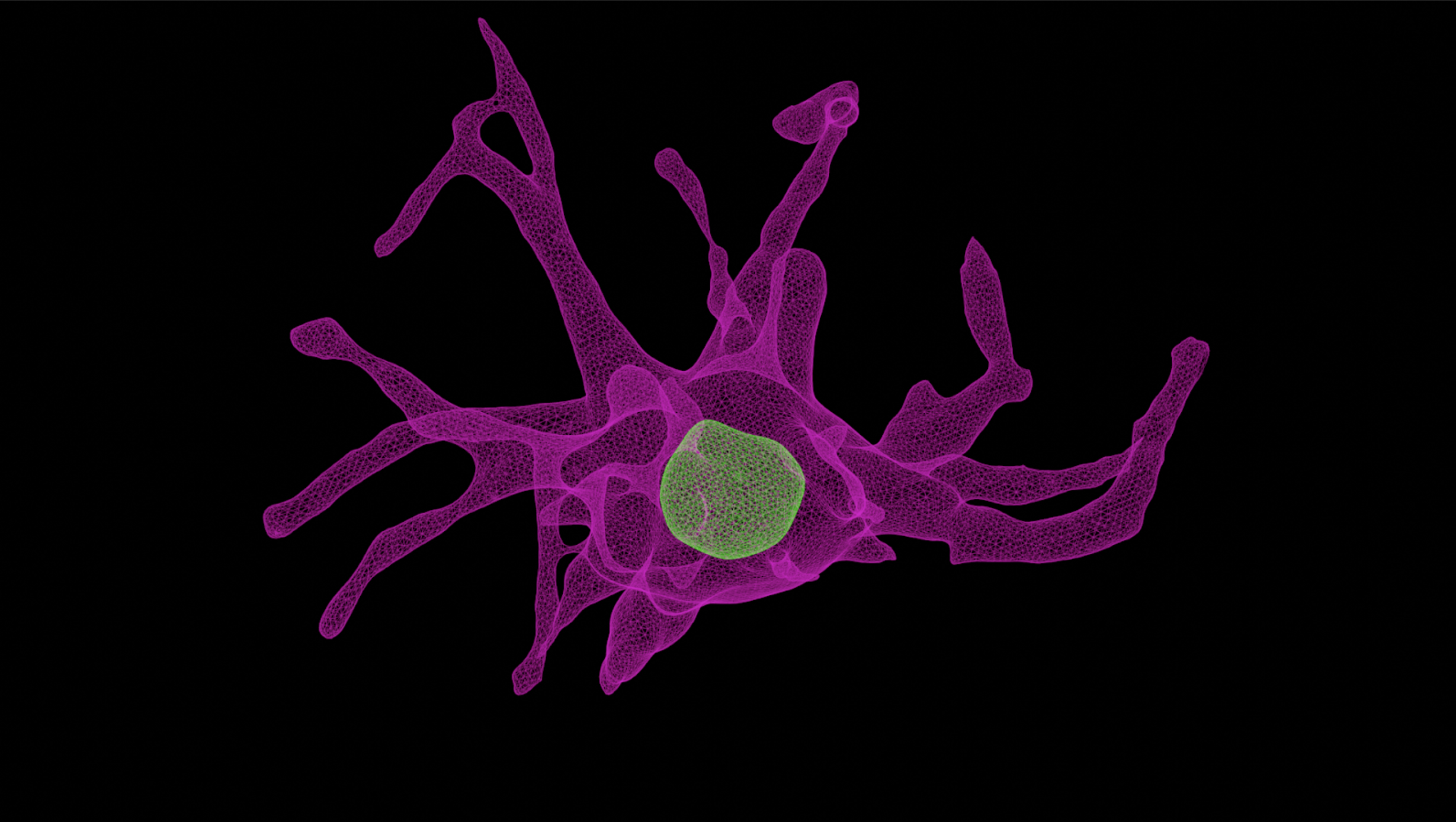
Sentinal4D is pioneering innovation in oncology by combining advanced 3D imaging with deep learning to analyze complex cancer data, including cases like melanoma and paediatric neuroblastoma, breast, and pancreatic cancer. With ambitions to become disease agnostic, their mission is to speed up drug development and bring effective therapies to the clinic faster.
Small teams lack big company infrastructure
As a deep-tech startup, Sentinal4D faced a familiar challenge, how to move fast and build impactful products without the infrastructure of a large company. “We’re a small team, and every decision counts,” said Matt De Vries, co-founder.
Their models, designed for analyzing massive 3D microscopy images and videos, each as large as 32GB, demanded powerful GPUs and scalable infrastructure. Building that capability in-house, or learning additional tools, risked diverting focus from the science itself. At the same time, they needed to make use of startup credits scattered across both AWS and GCP.
“Lightning AI let us skip the complexity of learning tools like SageMaker and Kubernetes,” said Matt De Vries, the company’s co-founder and CTO. “It helped us stay focused on our models and made it easy to tap into our cloud credits from both providers. From day one, we were cloud agnostic.”
Training at scale, without the overhead
As their research accelerated, Sentinal4D needed a way to manage both large-scale model training and ongoing data processing without juggling separate tools or environments. Lightning AI’s combination of Studios and Teamspaces offered exactly that: a central workspace where high-compute jobs like model training on H100s could run alongside lighter data curation tasks.
“The structured environment meant we could easily manage different workflows in one place,” said CTO Matt De Vries. “We could switch between machines depending on the job, without having to rebuild pipelines or wrangle separate infrastructure.”
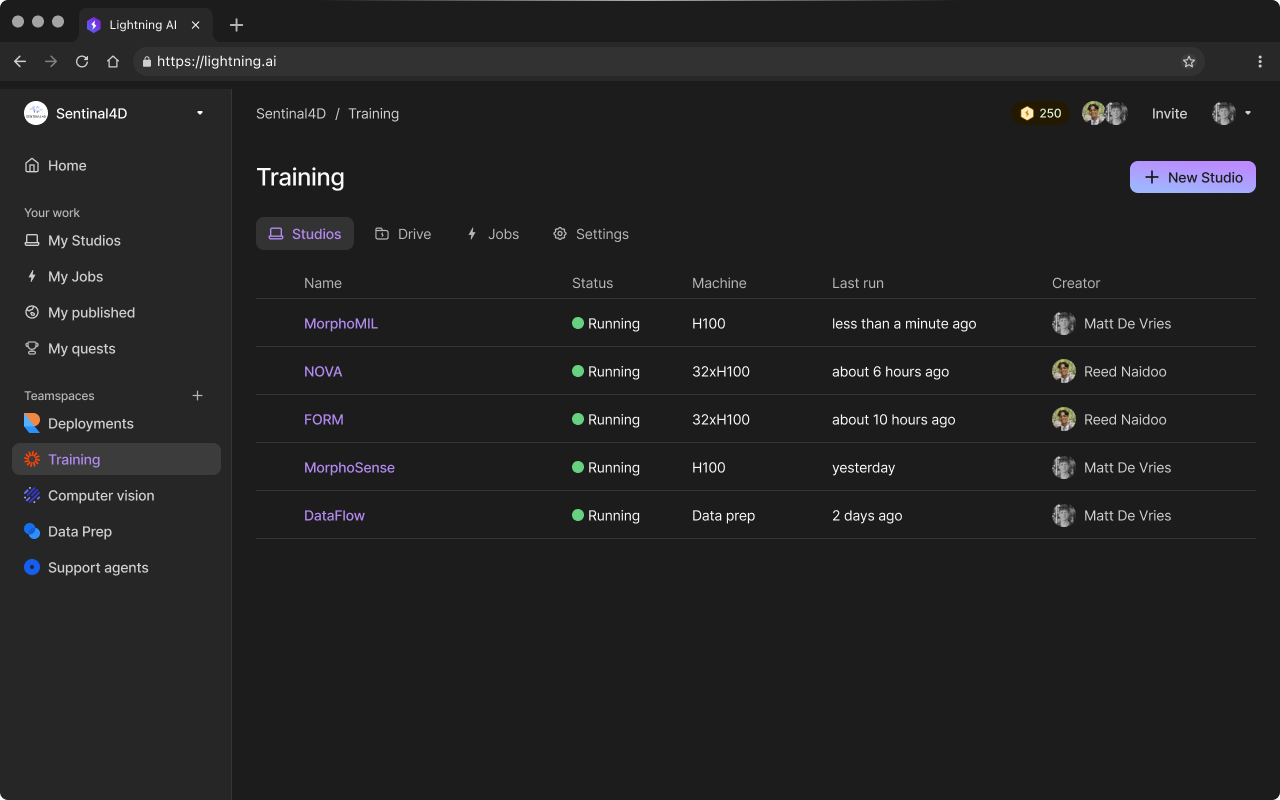
“Lightning’s Teamspaces gave us the structure we needed while still having full control over how we set up and optimized our workflows,” Matt added.
This flexibility was essential for a team constantly balancing deep learning experiments with a daily influx of fresh 3D microscopy data. It allowed them to stay agile, iterate quickly, and keep moving without sacrificing scientific focus. As a small team handling high-throughput microscopy data daily, optimizing for time and focus was essential. Managing infrastructure manually, even with powerful cloud platforms, can introduce overhead that distracts from core research. “Lightning AI streamlined that layer for us,” said Matt. “We could dedicate our energy to model development and data quality, rather than managing infrastructure lifecycle and orchestration.”
Moving quickly wasn't just about infrastructure and available compute, it also meant getting answers when they hit roadblocks. “We’re a small team, waiting days for answers isn’t an option,” said Matt. “Having access to Lightning’s AI experts made a big difference in helping us move fast. I have been blown away by the level of support we have received."
As the team ramped up, they brought on a new contributor to help share the load. “That extra seat you gave us helped us bring someone new into the project and ramp them up quickly,” said Matt. “It made a real difference for a startup like ours.”
Building quickly with fewer collaboration hurdles
With research, data processing, and model development all moving in parallel, Sentinal4D needed infrastructure that supported fast onboarding and seamless collaboration. Lightning AI made that possible. Within a week, the entire team was working in a shared environment. No complex setup, no steep learning curve. “We were able to get going fast without a steep learning curve,” said Matt. “It’s probably saving us 20 hours a week, which is critical when you're juggling multiple priorities.”
With teammates based in different parts of the world, smooth collaboration was essential. Shared access to projects and compute, enabled the team to collaborate from anywhere. “Being able to work together from any corner of the globe, without friction, means we can stay focused on the science,” added Matt.
Delivering oncology models in half the time
As a lean startup, Sentinal4D had to be strategic with both time and resources. While the broader team brings together expertise across biology, imaging, and engineering, the AI effort was initially driven by just one full-time and one part-time contributor. Despite that, the team progressed from concept to a working model in under nine months.
“Being able to cut that timeline in half is huge for us,” said Matt. By staying focused on scientific goals and eliminating infrastructure bottlenecks, the team accelerated development without needing to grow headcount prematurely. “It means we can start making an impact in drug discovery much sooner,” added Matt.
Pushing cancer research forward
Sentinal4D is on a mission to transform how therapies are discovered and brought to the clinic. Not only through scale, but through precision, passion, and deliberate choices. Their progress isn’t just technical; it’s deeply personal. Behind every model is a commitment to improving outcomes for patients by making the drug discovery process faster, more targeted, and more effective.
By leveraging platforms like Lightning AI, the team has built the infrastructure needed to move quickly without compromising scientific depth. Every iteration of their models brings the field closer to therapies that are grounded in real biology. Ones that are interpretable, scalable, and aligned with how diseases behave in the real world.
Looking ahead, Sentinal4D is focused on building adaptive, disease-agnostic pipelines capable of addressing increasingly complex biological challenges. “We’re decoding the building blocks of life in 3D to accelerate how the world discovers and develops new treatments,” said Matt.
Read more case studies and blogs:
• Reticular Sped Up Drug Discovery Research From 6 to 3 Months with Lightning AI
• How this Team Won the LeRobot Hackathon by Folding Shirts and Reimagining Robotics
• View all