
Why this viral AI agent is powerful and risky to run locally
In one week, this AI agent went through three different names (Clawdbot, Moltbot, and now OpenClaw) and became one of the fastest-growing open source projects of the year with thousands of developers spinning up “always-on” machines to keep it running.
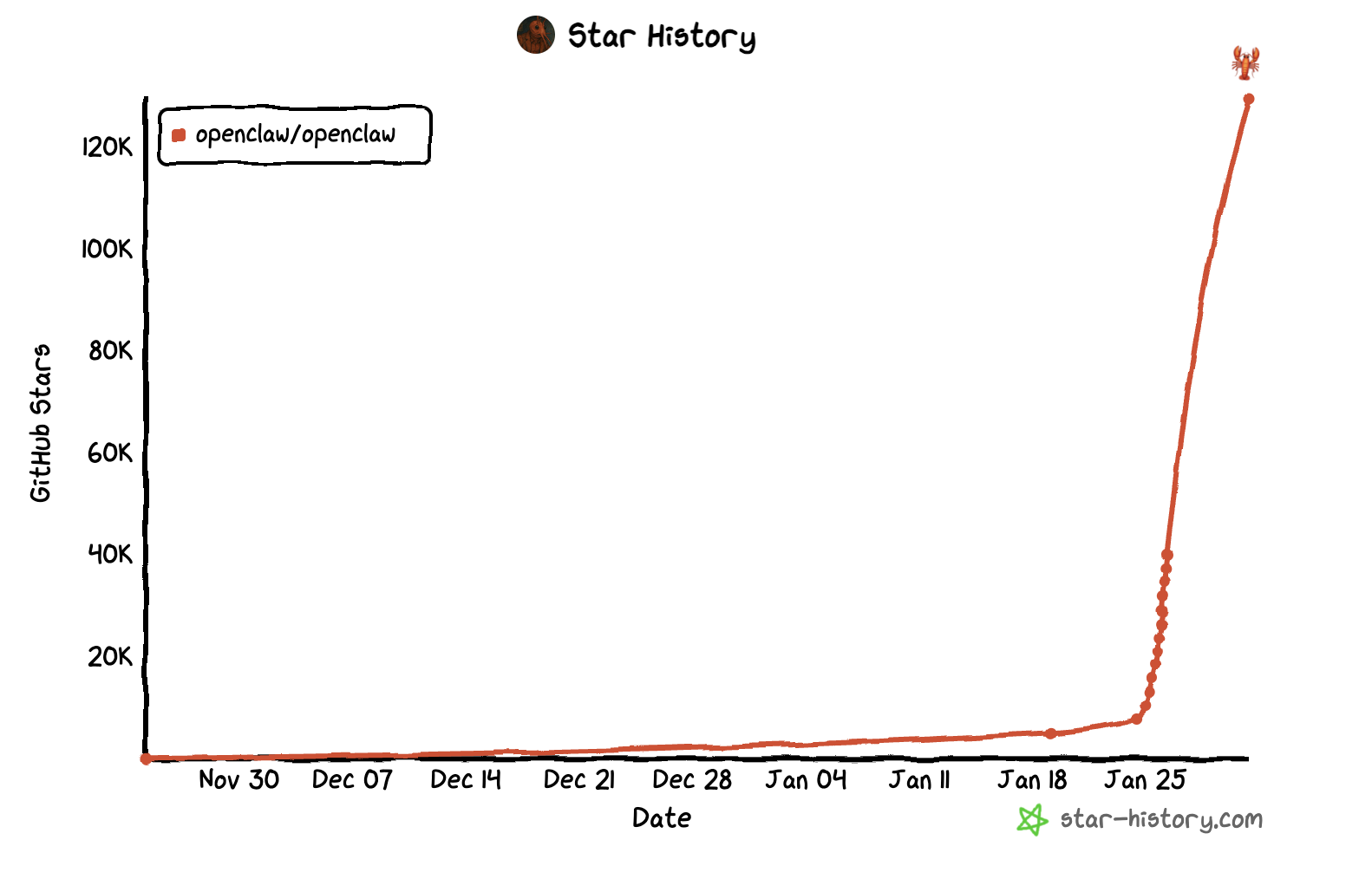
This article explains what OpenClaw is, why it exploded, what the security risks actually are, and how to run it safely in the cloud without buying dedicated hardware.
What is OpenClaw?
OpenClaw is an open-source autonomous personal AI assistant first released in late 2025. It is not a chatbot in the traditional sense. It’s an agentic system designed to run continuously, maintain long-lived state, and execute actions outside the browser tab. Users access it for free and easily expand its connectivity across apps, services, and messaging platforms like WhatsApp, Telegram, Signal, and Slack through simple commands.
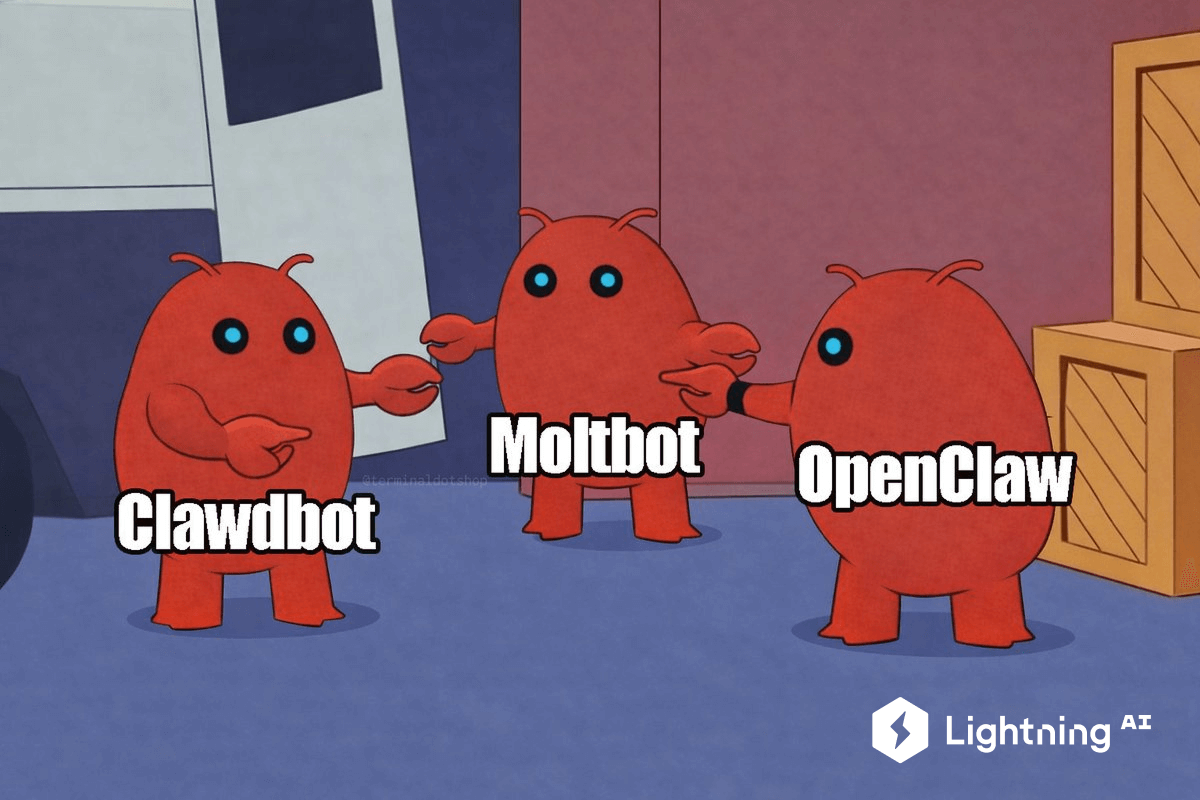
Clawdbot, Moltbot and OpenClaw: why the name keeps changing
Shortly after its release as Clawdbot in November 2025, it quickly went viral. In early 2026, Anthropic raised trademark concerns due to potential confusion with its Claude-branded models. Within days, the project was rebranded as Moltbot. Then OpenClaw was approved as the final name and the website and repositories were updated.
Even after the rebrand, the old names keep popping up, adding to public confusion in addition to fueling scams, typosquat domains, fake repositories, and malicious clones.
What Clawdbot and Moltbot actually do
Clawdbot and Moltbot aren’t separate products. They are popular implementations built on top of OpenClaw.
Users run them as always-on personal assistants capable of executing complex tasks across multiple applications. A single message like “check my calendar and reschedule my flight” can trigger browser automation, file access, API calls, and outbound messages.
That’s the appeal. These agents don’t just suggest actions. They take them. This is exactly why where they run matters so much.
The Mac Mini Phenomenon
OpenClaw's virality created an unexpected hardware rush. As users sought dedicated machines to run their agents 24/7, Mac Minis became the go-to choice. The project was nicknamed "The Clawdfather" for driving Mac Mini sales. Mac Minis were a clever, scrappy bootstrap move, and virality made them iconic. But as infrastructure, they suffer from: poor scalability, high ops overhead, weak server ergonomics, and long-term cost/risk issues.
“The Clawdfather” worked as a moment. It doesn’t work as a foundation.
Why running OpenClaw locally is risky
Within days of going viral, security researchers documented serious issues:
- Hundreds of OpenClaw instances with exposed admin dashboards were discoverable via simple searches.
- Many leaked API keys, authentication tokens, and full conversation histories.
- Prompt injection demo: Researcher Matvey Kukuy sent a malicious email to a vulnerable instance. The AI read it, believed it was legitimate, and forwarded the user's last 5 emails to an attacker address. It took 5 minutes.
- No sandboxing: Early versions had no directory isolation. A casual "list my files" command in a group chat could expose your entire system structure to strangers.
Much of OpenClaw’s early popularity came from the idea that you could run it locally on your own machine. In reality, running autonomous agents locally doesn’t remove risk. It moves it onto the user.
OpenClaw needs deep access to the system to work well. If it is not set up correctly, it can reach email accounts, calendars, messaging apps, files, and system commands. Combined with memory and automated decision-making, mistakes compound quickly.
Credential leakage is much more serious when the agent can send messages, change data, or run commands. Many reports compare OpenClaw to an early type of consumer-friendly AI. This AI came before any safety measures were established.
Running OpenClaw Securely: The Cloud Alternative
Lightning AI runs OpenClaw inside an isolated container with managed secrets, persistent storage, and explicit lifecycle controls. The home network is never exposed, so the agent can be started, stopped, or destroyed without touching local hardware or exposing a home network.
The one-click template addresses every major risk:
- Security improvements:
- Isolated container environment (separate from your personal files)
- Secrets management (API keys never exposed in code)
- No home network exposure (no Shodan risk)
- Kill switch from anywhere (stop the agent remotely)
- Cost advantages:
- $0 hardware upfront (vs $600+ Mac Mini)
- Auto-scales to $0 when idle (vs 24/7 power consumption)
- Pay only for compute you use
- Operational benefits:
- One-click deployment (no terminal wrestling)
- Persistent storage (agent state survives restarts)
- Remote access (control from anywhere)
- Easy to scale (launch multiple agents without buying hardware)
Lightning AI provides the same OpenClaw functionality, just with proper isolation and modern infrastructure practices.
How OpenClaw changes the threat model for developers
Traditional applications fail in limited ways. For example, a prompt injection vulnerability in a chatbot might leak text. In an agent with email and filesystem access, the same vulnerability can trigger outbound actions, data exfiltration, or credential misuse.
OpenClaw represents a shift in how developers need to think about security and operations. The agent often has access to messaging platforms, email, calendars, browsers, local files, and API credentials. It also has memory and decision making logic layered on top.
From an engineering standpoint, this creates three new requirements:
- Isolation: The agent must run in an environment that is strictly separated from personal files and credentials.
- Observability: Logs, execution traces, and audit history are no longer optional. You need to see what the agent did and why.
- Control: Long running agents need explicit lifecycle management. Being able to stop, pause, or destroy an agent remotely is critical when something goes wrong.
These requirements are not unique to OpenClaw. They apply to any agentic system that is always on and capable of acting independently. OpenClaw is simply one of the first projects to make these challenges visible to a broad audience.
With OpenClaw we are witnessing a clear change in how failures behave and how risks propagate. Autonomous agents collapse multiple systems, permissions, and decision loops into a single runtime. Treating these agents like normal applications is a mistake. They need isolation, visibility, and explicit control boundaries from day one.
OpenClaw is early, but already shows new demands: in a single week, the project changed names, adoption exploded, and threats were detected as developers improvised always-on systems just to keep up.
This pace is not an anomaly. It is the new baseline for agentic software.
The tools are changing in days, not weeks. The environments they run in must match that cadence.
Read more blogs and case studies
• Running OpenClaw safely - Mac Mini vs. Cloud Laptop.
• Why we merged Lightning AI and Voltage Park to build an AI-native cloud
• View all